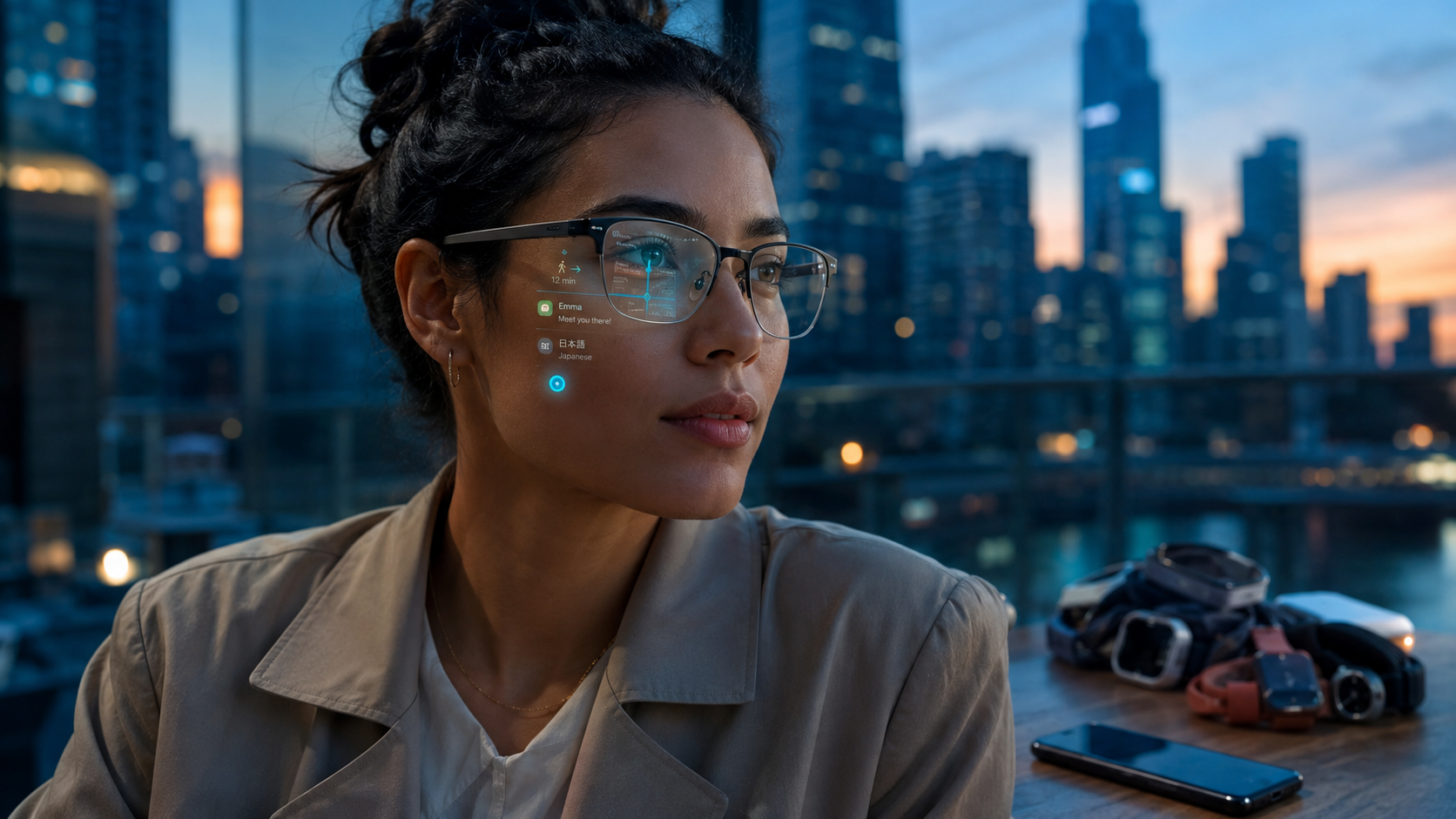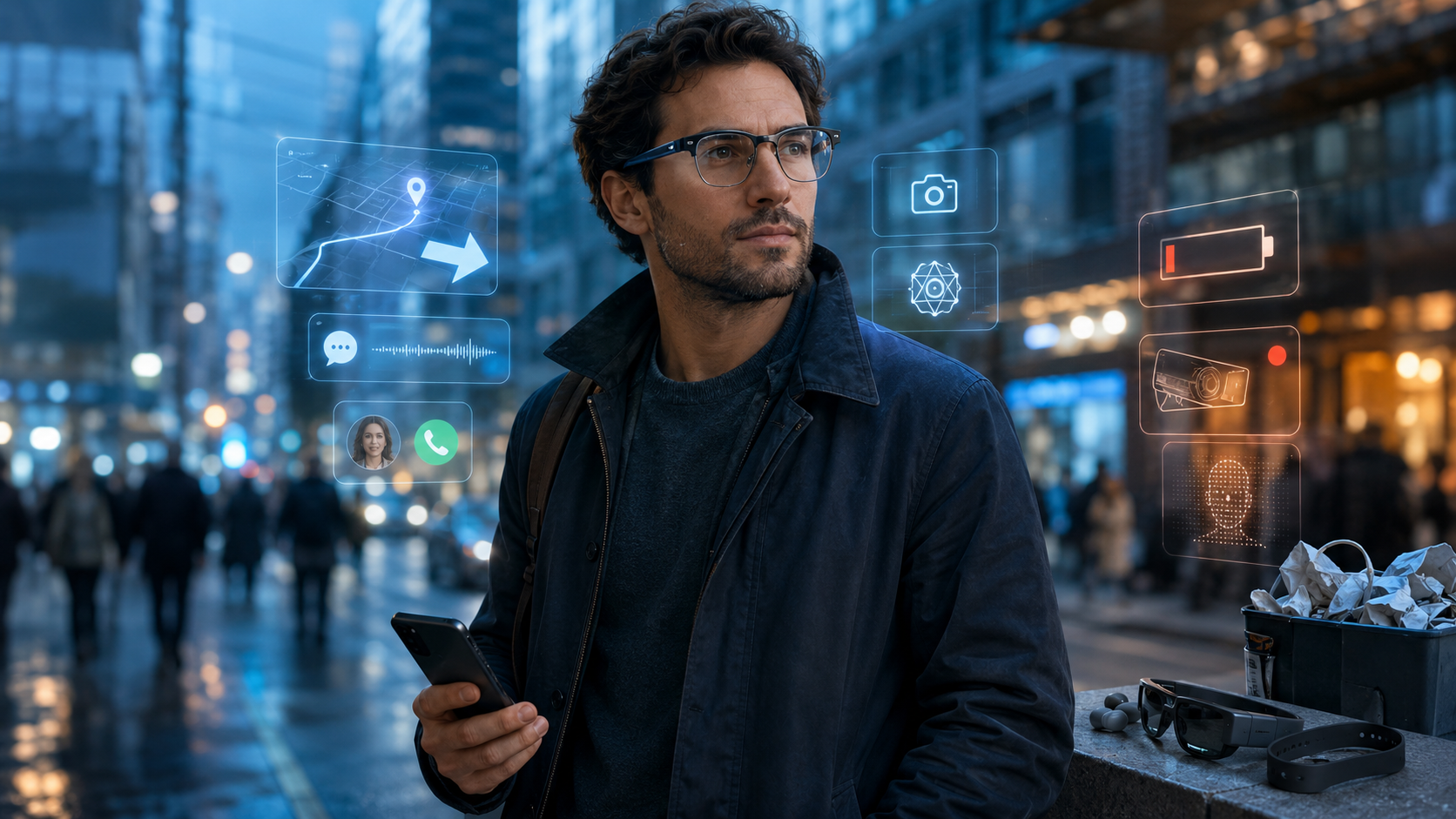
For more than a decade, technology companies have promised that smart glasses will change how people communicate, work, travel and consume information. Instead of repeatedly looking down at a smartphone, users would be able to receive directions, answer calls, take photographs, translate conversations and consult an artificial-intelligence assistant—all while looking at the world around them.
That vision has not yet become a part of everyday life. Early products were expensive, socially awkward and technically limited. Some disappeared almost as quickly as they arrived. However, the latest generation of smart glasses is lighter, more fashionable and significantly more useful. Artificial intelligence has also given the technology a clearer purpose.
The question is no longer whether companies can build smart glasses. They clearly can. The real question is whether these devices will eventually replace the smartphone—or remain an interesting accessory used by a relatively small group of consumers.
The Long and Difficult Road to Smart Glasses
Smart glasses are not a completely new idea. Google introduced Google Glass to selected users in 2013, presenting it as a revolutionary form of wearable computing. The product included a small display, camera and voice controls, allowing users to take photographs, read messages and obtain information without holding a phone.
The experiment attracted enormous publicity, but it also created immediate controversy. People were uncomfortable around users who appeared capable of recording them without permission. The device was expensive, its battery life was limited and its unusual appearance made wearers stand out in public.
Google eventually stopped selling the original consumer version. Although the technology later found specialised applications in industries such as manufacturing, logistics and healthcare, Google Glass became a famous example of a futuristic product arriving before society and the technology were ready for it.
Other companies attempted similar products, but most struggled with the same combination of problems: high prices, limited usefulness, short battery life, bulky designs and privacy concerns.
The industry nevertheless learned an important lesson. Consumers did not necessarily want a computer attached to their faces. They wanted ordinary-looking glasses that could quietly perform useful tasks.
Why the New Generation Is Different
Today’s smart glasses are considerably more practical than their predecessors. Instead of trying to place an entire smartphone interface directly in front of the eyes, many current models concentrate on a smaller collection of features.
Ray-Ban Meta glasses, for example, combine a camera, microphones, open-ear speakers and voice-controlled artificial intelligence inside frames that look much like conventional Ray-Ban eyewear. Users can take photographs, record short videos, listen to music, answer calls and ask questions about what they are seeing.
Meta says its second-generation glasses include a 12-megapixel camera, improved audio and access to its AI assistant. Later software updates added features such as live translation, visual recognition and reminders. The company has also expanded its wearable strategy through Oakley-branded models designed for athletes.
This approach is important because fashion is not a minor consideration for wearable technology. A smartphone remains in a pocket or handbag much of the time, but glasses sit in the centre of a person’s face. If they are uncomfortable or unattractive, most people will not wear them regularly, regardless of their technical capabilities.
By working with established eyewear companies, technology firms are attempting to make smart glasses look like familiar fashion products rather than laboratory prototypes.
Artificial Intelligence May Be the Missing Ingredient
The arrival of generative AI could be the development that finally gives smart glasses a convincing reason to exist.
A conventional voice assistant normally responds to a spoken command without understanding what the user is looking at. Smart glasses equipped with cameras and microphones can potentially give an AI system visual and environmental context.
A traveller might look at a road sign and ask for a translation. A shopper could examine a product and request information about its ingredients. A person cooking dinner might ask the glasses to identify an item or explain the next step in a recipe. Someone visiting an unfamiliar city could receive spoken or visual directions without repeatedly checking a phone.
Google has demonstrated Android XR glasses that use its Gemini AI system to understand what the wearer sees and hears. Demonstrated functions include navigation, messaging, photography, calendar assistance and real-time translation. Google has said its intelligent eyewear will work with Android and iOS phones, with frames developed alongside brands such as Warby Parker and Gentle Monster.
This is a more natural form of computing. Instead of opening an application, typing a question and uploading a photograph, the user can simply look at something and speak.
If such interactions become reliable, smart glasses could develop into the most convenient way of accessing AI. The smartphone would continue supplying connectivity and processing power, but the glasses would become the everyday interface.
Could Smart Glasses Actually Replace Smartphones?
Replacing the smartphone is a much greater challenge than supplementing it.
Modern smartphones perform an extraordinary range of functions. People use them to watch films, write emails, manage bank accounts, shop online, edit photographs, complete official documents and participate in video meetings. A pair of lightweight glasses cannot yet provide an equally efficient interface for all these activities.
Smart glasses are strongest when people need brief information or hands-free assistance. They are less suitable for writing a long message, comparing detailed documents or navigating a complicated financial application.
Products with built-in displays may eventually show notifications, maps, captions and other visual information directly in the wearer’s field of view. Meta’s Ray-Ban Display glasses, introduced with a wrist-worn neural-control band, are an example of the industry moving toward this model. Google is similarly developing display-equipped Android XR eyewear.
Even so, glasses may not completely eliminate the need for another screen. A more realistic future is one in which several connected devices divide the smartphone’s responsibilities. Glasses might handle navigation, communication, photography and AI assistance, while a watch, ring, wristband or small handheld screen performs other tasks.
Therefore, smart glasses may become the next major personal-computing platform without literally making the smartphone disappear.
The Battery Problem
Battery life remains one of the biggest technical obstacles. Smartphones have enough physical space for relatively large batteries, but glasses must remain light and comfortable. Manufacturers have to fit batteries, processors, cameras, speakers and wireless components into narrow frames.
Recording video, running a display and continuously using AI can consume power quickly. A pair of glasses may provide acceptable battery life during ordinary mixed use but drain much faster when the camera or live AI functions are used continuously.
Charging cases can help, just as they do with wireless earbuds, but frequently removing and charging a product weakens the idea that it can be an always-available assistant.
The industry will need more efficient chips, improved batteries and intelligent power management before smart glasses can fully compete with smartphones. Consumers are unlikely to depend on a device that stops working halfway through the day.
Privacy: The Most Serious Social Barrier
Technical improvement alone will not guarantee success. Smart glasses introduce a major question: how can people know when they are being recorded?
With a smartphone, the act of filming is usually visible. A person raises the device and points its camera towards a subject. A camera built into ordinary-looking glasses is more difficult to notice.
Meta’s glasses include an external light that activates during recording, as well as features intended to detect interference with that light. Nevertheless, critics argue that small indicators may be overlooked, misunderstood or deliberately obstructed.
The issue became more serious as smart glasses gained popularity. In August 2026, courts in England and Wales prohibited Meta smart glasses inside court buildings because of the danger of unauthorised recording. Around the same time, a German digital-rights organisation filed a criminal complaint concerning the privacy implications of camera-equipped glasses.
Schools, hospitals, courtrooms, government buildings, changing rooms and private businesses may introduce their own restrictions. Even where recording is legal, it can still make people feel uncomfortable.
AI adds another layer of concern. A device that can not only record a face but also analyse surroundings, recognise objects and remember conversations may collect extremely sensitive information. Strong privacy controls, visible recording signals, local data processing and clear limitations on facial recognition will be essential.
If members of the public begin treating smart-glasses users with suspicion, the entire market could repeat the social rejection experienced by Google Glass.
Comfort, Prescription Lenses and Accessibility
For smart glasses to become a mass-market product, they must work for people who already need prescription lenses. Consumers should not have to choose between seeing clearly and using digital features.
Manufacturers must provide support for different prescriptions, lens types, frame sizes and face shapes. The glasses also need to remain comfortable during many hours of use. Even a small increase in weight can create pressure on the nose or behind the ears.
At the same time, the technology could provide important accessibility benefits. Live captions may assist people with hearing loss. Spoken descriptions could help users with limited vision understand their surroundings. Translation tools may help people communicate across language barriers, while hands-free controls could benefit users with limited mobility.
These practical applications may prove more valuable than entertainment features.
Price Will Decide Whether Adoption Becomes Widespread
Early consumer technologies often begin as expensive luxury products. Prices eventually fall as production increases and components become more efficient.
Basic camera-and-audio smart glasses are already far less expensive than sophisticated mixed-reality headsets. However, models with displays, advanced sensors or separate control devices can cost considerably more. Meta launched its Ray-Ban Display system at $799 in the United States, placing it well above the price of ordinary glasses and in competition with capable smartphones.
Apple’s Vision Pro demonstrates what advanced spatial computing can achieve, including high-resolution displays, eye tracking and sophisticated environmental sensors. But it is a headset rather than ordinary eyewear, and its size and price prevent it from serving as an everyday smartphone replacement.
The winning product will probably not be the one with the greatest number of technical features. It will be the one that offers the right combination of appearance, usefulness, comfort, privacy and affordability.
Workplace Uses Could Drive Early Success
Even if consumer adoption remains gradual, smart glasses may expand quickly in professional environments.
A technician repairing machinery could view instructions without putting down tools. Warehouse workers could receive picking directions. Surgeons and nurses might consult information while keeping their hands free. Remote specialists could see what a field worker sees and provide immediate guidance.
In these situations, the financial benefits are easier to measure. If glasses reduce errors, shorten training time or increase productivity, companies may accept higher purchase prices and less fashionable designs.
Workplace adoption could also help improve the technology before it becomes fully mainstream. Smartphones followed a similar path in some respects: mobile email and business communication helped establish their value before the application economy transformed them into universal consumer devices.
Another Failed Gadget—or an Inevitable Evolution?
Smart glasses are unlikely to replace smartphones immediately. The technology still faces serious limitations involving battery life, displays, comfort, privacy and social acceptance. There is also a danger that companies will add unnecessary features simply because they are technically possible.
Yet dismissing smart glasses as another failed gadget would also be premature. The latest products are more discreet and useful than earlier attempts, while AI has introduced applications that are genuinely suited to a wearable, hands-free device.
The smartphone succeeded because it combined existing technologies—telephones, cameras, music players, maps and internet access—inside one convenient product. Smart glasses could perform a similar transformation by combining eyewear, audio, cameras, navigation and contextual AI.
Their future will depend on whether they solve everyday problems without creating greater ones. People may accept glasses that quietly offer directions, translation and assistance. They are less likely to accept devices that constantly interrupt their vision, require frequent charging or make everyone nearby feel watched.
The most likely outcome is not the sudden death of the smartphone. Instead, smart glasses may gradually take over the moments when pulling out a phone feels inconvenient. If they become comfortable, trustworthy and affordable, that gradual shift could eventually be as important as the smartphone revolution itself.
For now, smart glasses sit somewhere between breakthrough and experiment. They are no longer merely a futuristic curiosity, but they have not yet earned a permanent place on billions of faces.
References
- Meta, “Introducing the New Ray-Ban Meta Smart Glasses,” September 27, 2023.
- Meta, “Ray-Ban Meta Glasses Are Getting New AI Features and Partner Integrations,” September 25, 2024.
- Meta, “Introducing Oakley Meta Glasses,” June 20, 2025.
- Meta, “Meta Ray-Ban Display: AI Glasses With an EMG Wristband,” September 17, 2025.
- Google, “A New Look at How Android XR Will Bring Gemini to Glasses and Headsets,” May 2025.
- Google, “Watch Google’s Android XR Glasses Demo from I/O 2025,” May 23, 2025.
- Google, “Intelligent Eyewear Is Coming This Fall,” May 19, 2026.
- Apple, “Apple Vision Pro Technical Specifications,” accessed August 18, 2026.
- Reuters, “German Advocacy Group Lodges Criminal Complaint Over Meta AI Glasses,” August 12, 2026.
- The Guardian, “Meta Glasses Banned from Courts in England and Wales,” August 11, 2026.