Introduction
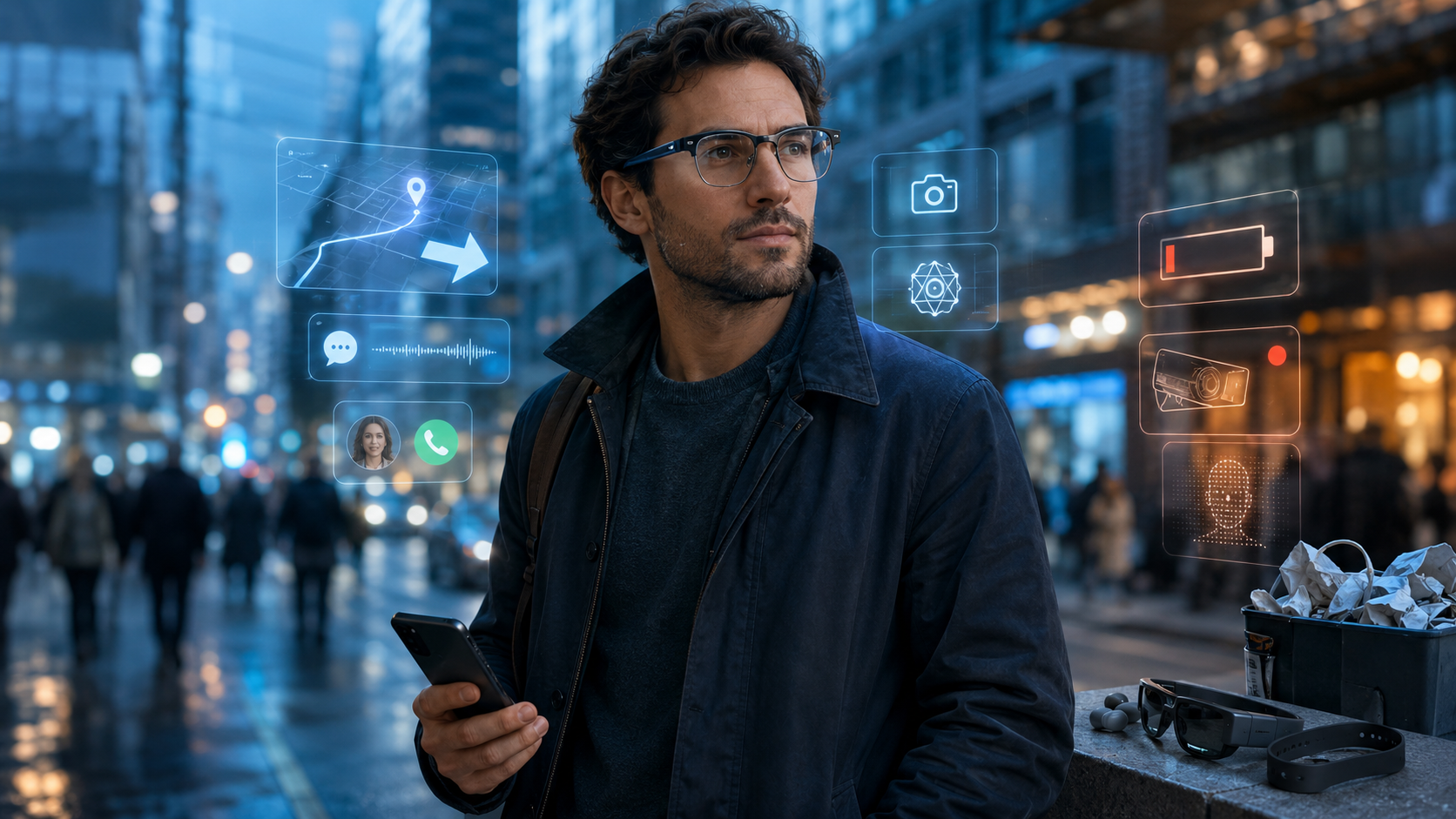
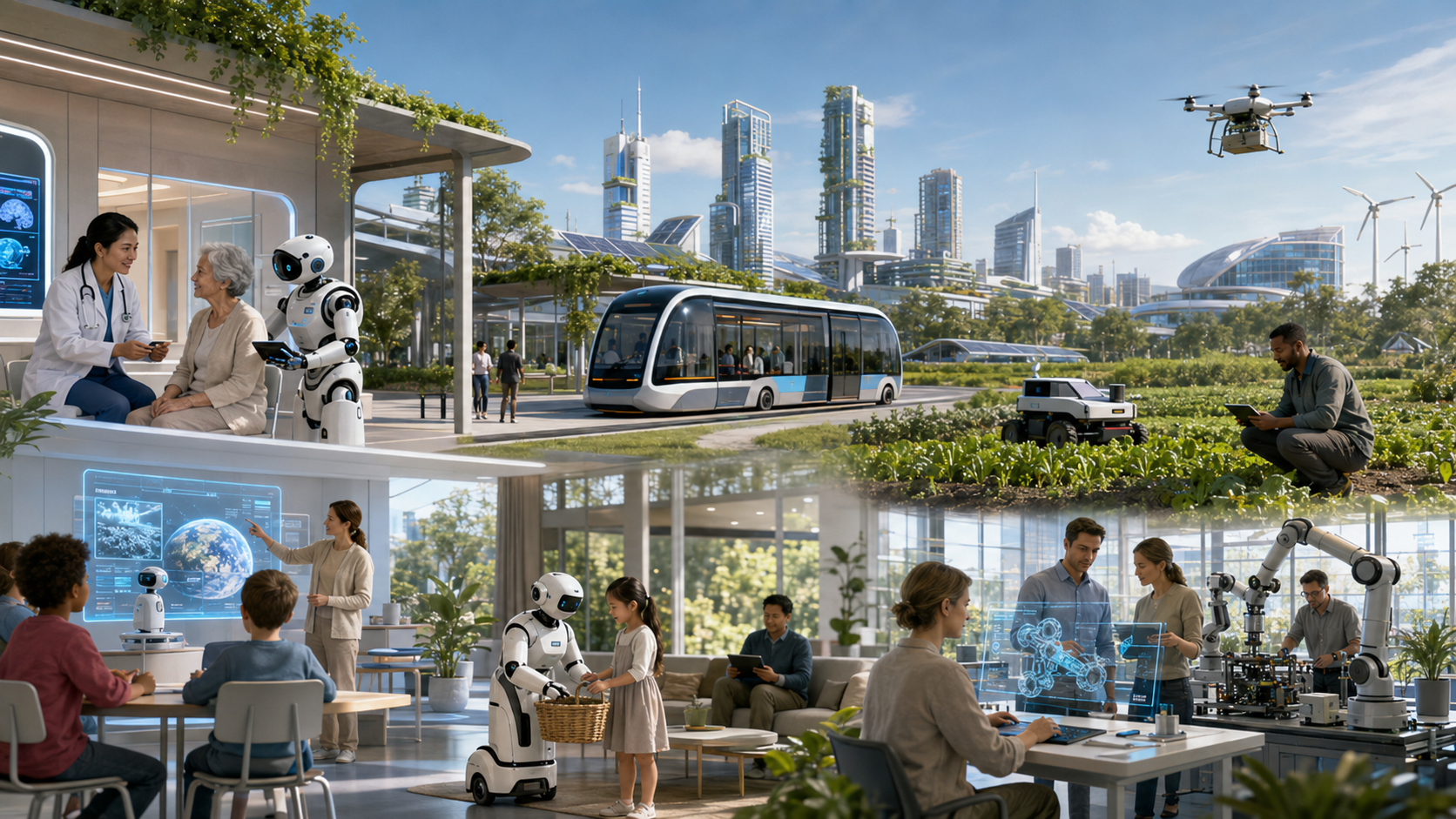
By 2050, bots are expected to become an integral part of everyday life, influencing how people work, learn, travel, receive medical treatment, produce food and manage their homes. The word “bot” will no longer refer only to a mechanical, human-shaped robot. It will include artificial-intelligence assistants, autonomous vehicles, medical machines, agricultural robots, delivery drones and software agents capable of completing tasks without continuous human direction.
These technologies will not necessarily produce a science-fiction world in which robots completely replace people. A more realistic possibility is that humans and intelligent machines will work together. Bots will perform repetitive, dangerous, physically demanding and data-intensive tasks, while people remain responsible for empathy, ethical judgement, leadership, creativity and important final decisions.
The International Federation of Robotics reported that almost 200,000 professional service robots were sold worldwide in 2024, an increase of 9 percent over the previous year. Labour shortages and the needs of ageing populations were among the important reasons for their growing adoption. This suggests that the transition towards an increasingly automated society is already underway.[1]
Healthcare and Medical Treatment
Healthcare is likely to be one of the most important fields for bots by 2050. Medical AI systems could continuously examine information collected by smartwatches, wearable sensors, clothing and household health-monitoring equipment. They may identify early signs of heart disease, diabetes, cancer, infections or neurological disorders before a patient develops serious symptoms.
AI medical assistants could compare a patient’s test results with enormous collections of medical records and research. Doctors may use these systems to identify possible diagnoses, choose appropriate tests and develop personalised treatments. However, a qualified medical professional should remain responsible for major decisions because machines can make errors or produce recommendations based on incomplete and biased information.
Robots will probably play a greater role in surgery. Robot-assisted operations already allow surgeons to perform certain procedures with greater precision. By 2050, surgeons may supervise machines capable of carrying out extremely delicate movements that would be difficult for the human hand.
Hospitals could also use robots to transport medicines, clean rooms, disinfect dangerous areas and deliver meals. Emergency robots may enter disaster zones, battlefields or buildings affected by infectious diseases before human medical teams arrive.
The World Health Organization says AI is already being used in diagnosis, clinical care, drug development, disease surveillance and health-system management. At the same time, WHO stresses the importance of ethical standards, public trust and equal access to these technologies.[2]
Elderly Care and Support for People with Disabilities
The world’s ageing population will increase demand for care services. By 2050, home-care robots may help elderly people get out of bed, walk safely, prepare simple meals and remember their medication. Sensors could detect falls, breathing problems or unusual behaviour and immediately contact relatives or emergency services.
Social robots may speak with people living alone, read books to them, play games and encourage them to exercise. Such machines could reduce loneliness to some extent, but they should not be treated as replacements for family relationships and human caregivers.
Bots could also make life more independent for people with disabilities. Voice-controlled assistants may operate household equipment, while robotic arms could help users eat, dress or complete workplace tasks. AI-powered visual systems may describe surroundings to people with impaired vision, and real-time language systems could help those with hearing or speech difficulties.
The most responsible approach will be to use bots to expand human care rather than to justify reducing contact between vulnerable people and professional caregivers.
Education and Personalised Learning
By 2050, many students may have personalised AI tutors that understand their learning level, preferred language, strengths and weaknesses. Instead of giving the same lesson to an entire class, these tutors could adapt explanations and exercises to each student.
A child who struggles with mathematics might receive visual examples and additional practice, while a student who learns quickly could move to more advanced material. AI tutors may also translate lessons into local languages, making high-quality educational resources available in communities that currently lack specialist teachers.
Teachers could use bots to check routine assignments, prepare lesson plans, monitor student progress and identify children who require additional support. This would allow educators to concentrate on critical thinking, creativity, motivation, discipline and emotional development.
However, excessive dependence on bots could weaken independent thinking. Students might use AI to produce answers without understanding the subject. There would also be privacy concerns because educational platforms could collect detailed information about children’s behaviour, performance and personal difficulties.
UNESCO recognises that AI could help address educational challenges but warns that rapid technological development has moved faster than many regulatory systems. It recommends a human-centred approach based on inclusion, equity, privacy and teacher training.[3]
Homes and Family Life
The smart home of 2050 could be managed by a combination of physical robots and invisible software bots. Household robots may clean floors, wash clothes, prepare basic food, manage waste and monitor home security. Some could identify damaged equipment and arrange repairs before a complete breakdown occurs.
A central household assistant might organise appointments, school schedules, shopping lists, energy use and utility payments. It could compare prices, order groceries and recommend ways to reduce expenses.
Kitchen robots may prepare meals according to a person’s medical needs, allergies and nutritional goals. Security bots could identify smoke, water leakage, gas leakage or suspicious movement and take immediate action.
These conveniences will carry a significant cost: household bots could know when people are home, what they eat, whom they speak to, how much they spend and what medical conditions they have. Strong privacy protections will therefore be essential. Consumers must be able to determine what information is collected, where it is stored and who can use it.
Employment and the Changing Workplace
Bots will transform employment, but they are more likely to replace particular tasks than entire professions. Routine administrative work—including scheduling, data entry, basic accounting, report preparation and standard customer-service responses—could become heavily automated.
Factories will use increasingly flexible robots that can manufacture different products and work safely near human employees. Warehouses may rely on autonomous machines to move, sort, pack and inspect goods.
Office workers could manage teams of AI agents. For example, a journalist might use bots to search databases and transcribe interviews while retaining responsibility for investigation, verification and final writing. A lawyer may employ an AI system to examine thousands of documents but still provide human judgement and represent the client.
The International Labour Organization reported in 2025 that approximately one in four jobs worldwide had some degree of exposure to generative AI. However, transformation was considered more likely than complete replacement.[4]
New occupations will emerge in robot maintenance, cybersecurity, AI auditing, safety testing, data governance and human-machine coordination. Nevertheless, workers in clerical, manufacturing, transport and customer-service positions could face significant disruption.
Governments will need to provide lifelong education, technical training and financial support during periods of unemployment. Without effective policies, the economic benefits of automation could become concentrated among technology companies and highly skilled workers, increasing inequality.
Transportation and Delivery Services
By 2050, autonomous vehicles may be common in large cities. People could request a driverless vehicle when needed rather than owning a private car. Public buses, trains and taxis may operate through connected systems that adjust routes according to passenger numbers, weather and traffic conditions.
Self-driving trucks could transport goods over long distances, while smaller delivery robots and drones handle the final stage between local distribution centres and homes.
Traffic-management bots may communicate with vehicles, roads and traffic lights. They could redirect vehicles around accidents, reduce congestion and provide emergency services with priority routes.
Autonomous transport could give elderly people and those with disabilities greater mobility. It might also reduce accidents caused by tiredness, distraction or dangerous driving. However, machines will face unpredictable situations, extreme weather, technical failures and cyberattacks. Clear laws will be required to determine responsibility when an autonomous vehicle causes an accident.
Agriculture and Food Security
Agricultural bots could play an essential role in feeding the world’s population while conserving water, fertiliser and energy. Autonomous tractors may prepare fields and plant seeds with great precision. Small robots could identify weeds and remove them without spraying an entire field with chemicals.
Drones and ground-based sensors may examine crops individually, identifying disease, pests, water shortages and nutritional problems. Robotic harvesters could operate for long hours and reduce crop losses during periods of labour shortage.
Livestock bots may monitor animals, distribute feed and identify illness at an early stage. Automated systems could also improve food processing, packaging, storage and transportation.
The UN Food and Agriculture Organization states that automation can reduce labour shortages, improve productivity, increase the efficiency of resources and support environmental sustainability. However, it also warns that technology must be made accessible to small-scale farmers.[5]
If robots remain affordable only to wealthy agricultural corporations, automation could deepen rural inequality and push small farmers out of the market.
Shopping, Restaurants and Hospitality
Retail bots may manage stock, clean stores, answer customer questions and arrange deliveries. AI shopping assistants could compare prices, check product reviews and make purchases according to a household’s budget.
Restaurants may use robots for repetitive kitchen activities such as cutting vegetables, mixing ingredients, washing dishes and packaging meals. Human chefs will remain important for taste, innovation, presentation and cultural authenticity.
Hotels could use robots for check-in, luggage handling, cleaning and room service. However, human hospitality may become more valuable precisely because it is personal. Luxury hotels and restaurants might advertise human interaction as a premium service in an otherwise automated world.
Government and Public Services
Bots could make government services faster and more accessible. AI assistants may help citizens apply for passports, licences, pensions, welfare payments and tax services. They could answer questions in several languages and provide services at any time of day.
Cities may deploy robots to inspect roads, bridges, power lines, water pipes and sewerage systems. Early detection of structural damage or leakage could save money and prevent disasters.
Emergency-response robots could enter burning buildings, collapsed mines, flood-affected areas or locations containing hazardous chemicals. They may search for survivors without placing rescuers in immediate danger.
However, automated government decisions would require transparency. A person denied welfare assistance, employment or a licence must have the right to understand the decision and appeal to a human authority. Bots should not become an unaccountable layer between citizens and their governments.
Environmental Protection and Energy
Environmental bots may monitor air quality, forests, oceans, wildlife and industrial pollution. Autonomous drones could detect forest fires, illegal logging or oil spills before they spread. Ocean robots may collect data about temperature, plastic waste and marine ecosystems.
AI systems could balance electricity supply and demand, integrate renewable energy and reduce waste in buildings and factories. Nevertheless, AI itself requires substantial energy. The International Energy Agency projects that global electricity consumption by data centres could more than double to approximately 945 terawatt-hours by 2030 in its base case.[6]
Therefore, the environmental value of bots will depend on energy-efficient hardware, cleaner electricity and responsible use. A machine that saves energy in one area but requires enormous computing resources elsewhere may deliver a smaller environmental benefit than expected.
Security, Policing and Warfare
Security bots may patrol dangerous industrial sites, inspect suspicious packages and protect critical infrastructure. Cybersecurity systems could continuously defend banks, hospitals, communication networks and electricity grids from digital attacks.
However, widespread facial recognition and behaviour-monitoring technology could produce a society in which every movement is recorded. Biased policing algorithms might unfairly target particular communities.
Autonomous weapons present an even greater danger. The United Nations has raised serious concerns about systems capable of selecting and attacking targets without meaningful human control.[7] International agreements will be needed to ensure that decisions involving human life are not transferred entirely to machines.
Entertainment and Companionship
By 2050, bots may create personalised films, music, games and virtual experiences. Viewers could request stories featuring particular characters, locations or endings. Virtual characters may remember previous interactions and adapt their personalities to individual users.
Companion bots could provide conversation and emotional support. They may be useful for people experiencing loneliness, but dependence on artificial companions could weaken real relationships. Users must understand that a bot can imitate sympathy without necessarily possessing human feelings or moral responsibility.
Major Risks and Ethical Challenges
The benefits of bots will be accompanied by several serious risks:
- Workers may lose jobs faster than governments can retrain them.
- Wealthy countries and households may benefit more than poorer communities.
- Companies could collect enormous amounts of personal information.
- Biased systems may produce unfair medical, educational or legal decisions.
- Criminals may use bots for fraud, surveillance and cyberattacks.
- People could become excessively dependent on machines.
- Governments may use automated systems for mass surveillance.
- AI infrastructure could consume large amounts of electricity and water.
The United Nations has emphasised that international cooperation and inclusive governance will be necessary to ensure that AI benefits humanity instead of widening existing divisions.[8]
Will Bots Replace Human Beings?
Bots will outperform people in calculation, repetition, pattern recognition, continuous monitoring and hazardous physical work. Yet human beings will remain essential where responsibility, compassion, cultural understanding, trust and ethical judgement are required.
The future should therefore not be understood as a competition between humans and machines. The better objective is cooperation in which machines improve human capabilities while people maintain authority over important decisions.
Conclusion
By 2050, bots could make medical treatment more preventive, education more personalised, agriculture more efficient, transportation safer and dangerous work less harmful. They may give elderly and disabled people greater independence and help societies respond more effectively to disasters and environmental challenges.
However, technological progress alone will not guarantee a better future. Without responsible policies, bots could contribute to unemployment, inequality, surveillance, misinformation and the concentration of power.
The central question is not simply how intelligent or capable bots will become. It is whether governments, businesses and societies can establish rules that protect human dignity, privacy, employment rights and democratic accountability.
The most successful societies in 2050 will probably not be those using the largest number of bots. They will be those that use them wisely—allowing machines to perform what they do best while protecting the qualities and responsibilities that must remain human.
References
- International Federation of Robotics. “Service Robots See Global Growth Boom.” World Robotics 2025, 7 October 2025. https://ifr.org/ifr-press-releases/news/service-robots-see-global-growth-boom
- World Health Organization. “Harnessing Artificial Intelligence for Health.” WHO Digital Health and Innovation. https://www.who.int/teams/digital-health-and-innovation/harnessing-artificial-intelligence-for-health
- UNESCO. “Guidance for Generative AI in Education and Research.” 7 September 2023, updated 16 January 2026. https://www.unesco.org/en/articles/guidance-generative-ai-education-and-research
- International Labour Organization. “Generative AI and Jobs: A Refined Global Index of Occupational Exposure.” 20 May 2025. https://www.ilo.org/publications/generative-ai-and-jobs-refined-global-index-occupational-exposure
- Food and Agriculture Organization of the United Nations. “Leveraging Automation to Transform Agrifood Systems.” 2 November 2022. https://www.fao.org/north-america/news/details/The-State-of-Food-and-Agriculture-2022-Leveraging-automation-to-transform-agrifood-systems/en
- International Energy Agency. “Energy Demand from AI.” Energy and AI, 2025. https://www.iea.org/reports/energy-and-ai/energy-demand-from-ai
- United Nations. “Governance of Artificial Intelligence in the Military Domain.” UN Digital Library. https://digitallibrary.un.org/record/4092186
- United Nations High-level Advisory Body on Artificial Intelligence. Governing AI for Humanity: Final Report. 2024. https://www.un.org/sites/un2.un.org/files/governing_ai_for_humanity_final_report_en.pdf