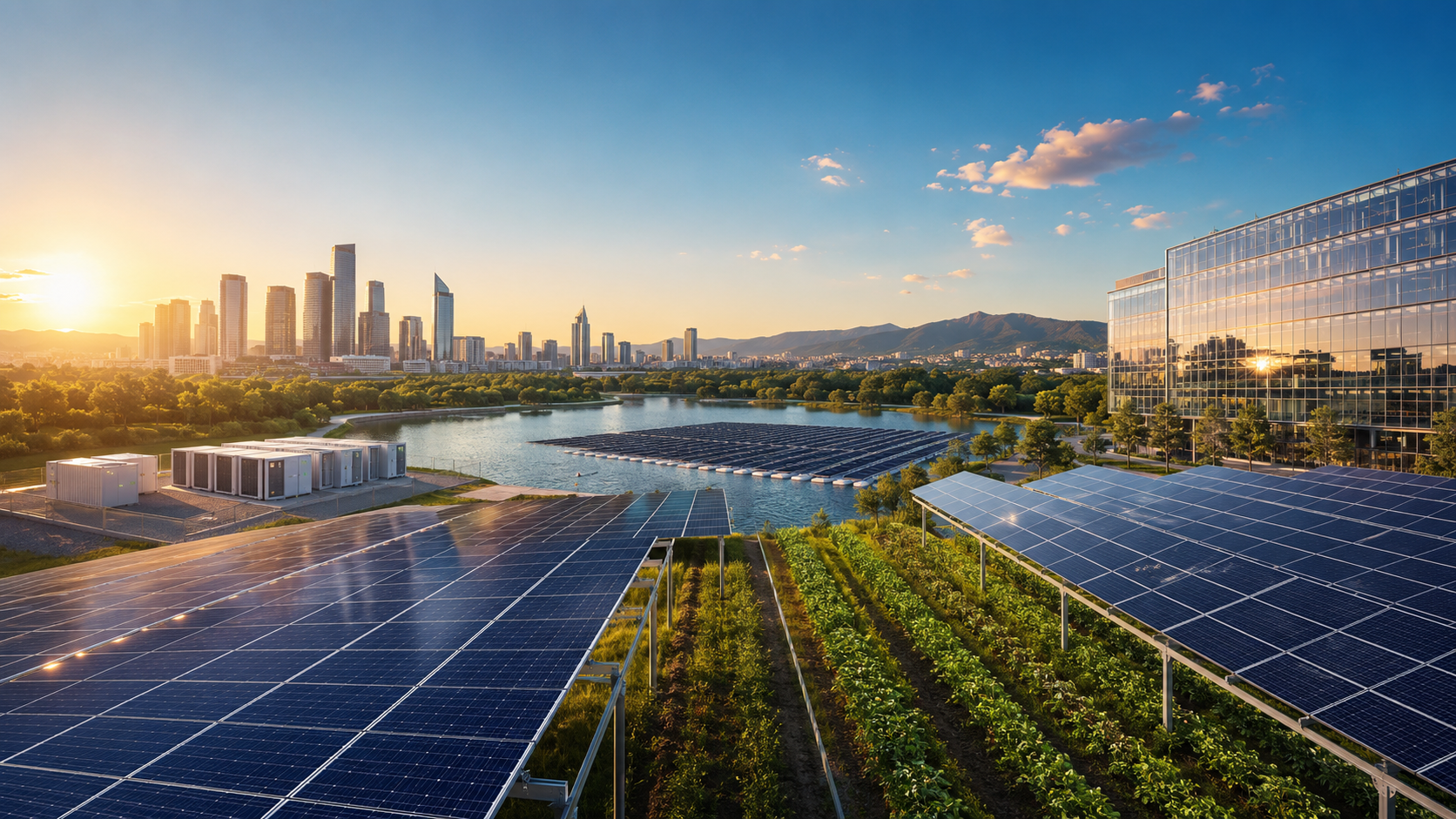
Solar energy is advancing more rapidly than almost any other form of electricity generation. Falling equipment costs, improvements in efficiency, growing electricity demand and concerns about climate change and energy security have encouraged countries to install solar systems at an unprecedented rate. This progress raises an important question: will the conventional solar panels seen on rooftops and solar farms today still be used in 2030, or will an entirely new technology replace them?
The most realistic answer is that solar panels will remain one of the world’s principal electricity-generating technologies in 2030. They will not be rendered obsolete within the next few years. Instead, their materials, design, efficiency and applications will continue to evolve.
Some panels installed in 2030 may look similar to those used today but contain more advanced silicon cells. Others may combine silicon with perovskite materials, collect sunlight from both sides or become part of windows, roofs and building façades. Batteries, smart grids and advanced power-management systems will also make solar electricity more reliable after sunset.
In other words, the solar panel is not about to disappear. It is entering a new stage of technological development.
Solar Power Is Expected to Expand, Not Decline
The strongest evidence against the replacement of solar panels by 2030 is the scale at which photovoltaic systems continue to be manufactured and installed.
According to the International Energy Agency, global renewable-power capacity is expected to increase by approximately 4,600 gigawatts between 2025 and 2030. Solar photovoltaic technology is projected to represent almost 80 percent of this worldwide renewable-capacity expansion. The IEA attributes its rapid growth to low equipment costs, relatively fast project development and broad public acceptance.
The agency expects utility-scale and distributed solar capacity additions to more than double during this period. Distributed systems include panels installed on houses, factories, commercial buildings and other properties rather than only in enormous power stations.
Solar generation is also expected to meet a substantial proportion of growing electricity demand. The IEA forecasts that global solar PV generation could rise by approximately 320–360 terawatt-hours annually through 2030. In countries such as China and India, solar power is expected to become an increasingly important part of the national electricity supply.
These projections show that the question is not whether the world will continue using solar panels. The more relevant question is what types of solar panels will dominate the market and how they will be incorporated into future energy systems.
Sources: IEA Renewables 2025 and IEA Electricity 2026.
Conventional Silicon Panels Will Remain Dominant
Most solar panels currently use crystalline-silicon cells. Silicon has remained dominant because it is abundant, well understood, durable and supported by an enormous global manufacturing industry.
The International Energy Agency’s Photovoltaic Power Systems Programme reports that crystalline silicon accounts for almost all present solar-cell production. Commercial monocrystalline silicon modules commonly offer efficiencies of approximately 20–25 percent. That means they convert around one-fifth to one-quarter of the sunlight striking them into electricity.
An entirely new technology would face considerable obstacles before it could replace silicon by 2030. Manufacturers would need to establish large factories, reliable supply chains and quality-control systems. Developers and financial institutions would also require evidence that the new panels could operate safely for 25 or 30 years.
The established silicon industry already produces hundreds of gigawatts of modules annually. Replacing that industrial structure in only a few years would be economically and practically unrealistic.
The U.S. Department of Energy has similarly noted that it can take close to a decade for an unproven photovoltaic technology to become sufficiently reliable and financially acceptable to compete at a large scale with established crystalline-silicon and thin-film products.
Therefore, conventional silicon will probably retain the largest share of the solar market in 2030. However, the cells inside silicon panels will continue changing.
Sources: IEA PVPS Trends in Photovoltaic Applications 2025 and U.S. Department of Energy Solar Supply Chain Report.
TOPCon and Other Advanced Silicon Cells
One of the most important transformations is already taking place within the silicon market. Older p-type PERC cells are being replaced by more efficient designs, particularly TOPCon, or tunnel-oxide passivated-contact cells.
IEA PVPS reports that TOPCon’s share of the crystalline-silicon cell market rose from approximately 30 percent in 2023 to around 70 percent in 2024. During the same period, the share held by conventional p-type PERC cells fell sharply.
Other designs include:
- Heterojunction, or HJT, cells
- Interdigitated back-contact cells
- Thinner silicon wafers
- Improved electrical contacts
- Larger and more durable module formats
These technologies reduce electrical losses and improve the amount of energy generated from a given panel area. By 2030, many installations described as “conventional solar panels” will therefore be considerably more efficient than older systems, even though they will still be based primarily on silicon.
The first major change will consequently be an evolution within existing panels rather than their disappearance.
Perovskite-Silicon Tandem Panels Could Be the Major Breakthrough
Among emerging technologies, perovskite-silicon tandem solar cells have attracted the most attention.
A conventional silicon cell does not use every part of the solar spectrum equally well. A tandem cell adds another light-absorbing material—usually perovskite—on top of the silicon. The perovskite layer captures higher-energy light, while silicon absorbs other wavelengths. By dividing the work between two materials, a tandem cell can convert a greater proportion of sunlight into electricity.
Tandem technology offers several possible benefits:
- Higher efficiency from the same panel area
- More electricity from space-constrained rooftops
- Reduced land requirements for some projects
- Potentially lower balance-of-system costs per watt
- New possibilities for lightweight and flexible products
Commercial perovskite-silicon tandem products have already demonstrated efficiency above that of many standard silicon modules. However, impressive laboratory efficiency is not the same as long-term commercial reliability.
Perovskites can be vulnerable to moisture, oxygen, heat and prolonged exposure to outdoor conditions. Manufacturers must prove that tandem modules can operate safely for decades—not merely months or a few years. They must also develop manufacturing methods that can reproduce high efficiency consistently across millions of full-sized panels.
By 2030, tandem panels could become commercially important, particularly for premium rooftops and locations where available area is limited. Nevertheless, they are more likely to supplement and improve silicon technology than completely replace it. In many tandem designs, silicon remains the bottom layer and continues to perform a central role.
Sources: U.S. Department of Energy—Photovoltaic Cell and Module Design and NREL—Hybrid Perovskites.
Bifacial Panels Will Collect Light From Both Sides
Another technology expected to become increasingly common is the bifacial solar module.
Traditional panels primarily collect sunlight through their front surface. Bifacial modules can also capture light reflected onto their rear side. The additional generation depends on the surface below the panels, their height, spacing, angle and surrounding environment.
Bifacial technology is particularly useful in:
- Large solar parks
- Desert areas with reflective ground
- Snow-covered regions
- Car parks with solar canopies
- Installations using sun-tracking equipment
- Agrivoltaic projects
Bifacial panels do not represent an alternative to photovoltaics. They are an improved version of the same basic technology. Their expanding use demonstrates how the industry is finding ways to increase electricity production without fundamentally abandoning the panel format.
Solar Panels Will Become Part of Buildings
Today, solar panels are usually attached to an existing roof. In the future, the electricity-generating surface may become part of the building itself.
Building-integrated photovoltaics, commonly known as BIPV, can include:
- Solar roof tiles
- Electricity-producing glass
- Solar windows
- Photovoltaic façades
- Balcony panels
- Solar shading structures
- Transparent or semi-transparent modules
These technologies may be especially valuable in crowded cities where there is insufficient land for large solar farms. Office towers, warehouses, railway stations, shopping centres and residential buildings could use parts of their exterior surfaces to generate electricity.
Nevertheless, building-integrated systems face higher costs, complex construction standards and maintenance challenges. They must perform two functions simultaneously: protecting the building and producing electricity. For that reason, BIPV is likely to grow by 2030 without replacing conventional rooftop and utility-scale panels.
Flexible, Lightweight and Thin-Film Solar Products
Thin-film photovoltaic technology uses extremely thin layers of light-absorbing material. Some thin-film products can be lightweight or flexible, allowing them to be installed where conventional glass-and-aluminium modules would be unsuitable.
Possible applications include:
- Curved industrial roofs
- Temporary structures
- Vehicles and boats
- Portable power systems
- Disaster-relief equipment
- Lightweight commercial buildings
- Consumer and military equipment
Cadmium telluride is already used commercially in large solar projects, while other materials remain at earlier stages of development.
Flexible solar products could open new markets, but their efficiency, durability and manufacturing costs will determine how widely they are adopted. They are unlikely to remove conventional panels from homes and solar farms by 2030. Instead, they will allow solar electricity to reach surfaces where rigid panels cannot be installed easily.
Floating Solar and Agrivoltaics Will Change Where Panels Are Installed
Future innovation will involve not only the composition of solar cells but also their location.
Floating photovoltaic systems place panels on lakes, reservoirs and other suitable bodies of water. They can reduce pressure on scarce land and may limit water evaporation. However, engineers must manage humidity, corrosion, wind, waves and environmental effects.
Agrivoltaic systems combine farming with solar generation. Panels may be placed above or between crops, allowing the same area to produce food and electricity. Partial shade can sometimes protect plants from extreme heat and reduce moisture loss, although the results depend heavily on crop type, climate and system design.
By 2030, floating solar and agrivoltaics could become significantly more common in regions facing land or water constraints. Once again, these approaches do not replace solar panels; they expand the places in which panels can operate.
Source: IEA PVPS—Floating Photovoltaic Power Plants.
Batteries May Be More Transformative Than a New Panel
Solar energy’s most obvious limitation is that production falls in cloudy conditions and stops at night. Consequently, the future of solar electricity depends heavily on energy storage.
By 2030, many new solar projects will be installed alongside batteries. These systems can store excess electricity during sunny hours and release it in the evening, during periods of peak demand or when the grid is disrupted.
Lithium-ion batteries will remain important, but other technologies may gain market share, including:
- Sodium-ion batteries
- Flow batteries
- Thermal-energy storage
- Pumped-storage hydropower
- Compressed-air systems
- Other long-duration storage technologies
Better inverters, artificial-intelligence-assisted forecasting, smart meters and flexible electricity tariffs will also help utilities balance solar generation with demand.
The most significant “replacement” by 2030 may therefore not be a replacement of solar panels. It may be the replacement of stand-alone solar installations with integrated solar-plus-storage systems capable of supplying electricity for longer periods.
Could Concentrated Solar Power Replace Photovoltaic Panels?
Concentrated solar power, or CSP, uses large mirrors to focus sunlight onto a receiver. The resulting heat can produce steam, operate a turbine and generate electricity. Heat can also be stored for several hours, allowing the plant to continue producing power after sunset.
CSP provides an important advantage in areas with intense direct sunlight, particularly deserts. It may also supply heat for industrial processes, desalination and chemical production.
However, CSP plants are generally more complex and location-dependent than photovoltaic systems. They require substantial capital investment, large areas and strong direct sunlight. They are therefore likely to complement photovoltaic solar farms in suitable regions rather than replace them worldwide.
Source: U.S. Department of Energy—Concentrating Solar-Thermal Power.
Will Hydrogen, Nuclear Fusion or Space-Based Solar Replace Panels?
Green hydrogen is sometimes described as a future energy source, but hydrogen is primarily an energy carrier. Electricity is required to produce it, and solar panels may provide a considerable share of that electricity. Hydrogen could therefore increase solar demand instead of replacing it.
Nuclear fusion may eventually provide large quantities of low-carbon power, but it is extremely unlikely to become a widely deployed commercial replacement for solar panels by 2030. Demonstrating a scientific breakthrough is different from building affordable power stations across the world.
Space-based solar power, in which satellites collect solar energy and transmit it to Earth, remains technically interesting but economically and operationally immature. It will not displace terrestrial solar panels within the 2030 timeframe.
Wind, hydroelectricity, geothermal power, bioenergy and conventional nuclear power will all remain part of the energy mix. Nevertheless, none possesses the combination of modularity, falling cost, rapid installation and geographical flexibility that would eliminate solar PV.
Challenges That Could Slow Solar Expansion
Solar technology’s future is promising, but continued expansion is not guaranteed. The industry must overcome several challenges:
- Insufficient electricity-grid capacity
- Delays in transmission-line construction
- Limited access to affordable financing
- Dependence on geographically concentrated supply chains
- Trade restrictions and political uncertainty
- Land-use conflicts
- Panel waste and recycling requirements
- Demand for silver, copper and other materials
- Extreme heat, dust, storms and flooding
- Shortages of skilled installers and engineers
In Pakistan and other developing countries, access to financing, grid stability, equipment quality and regulations governing net metering will be particularly important. Cheaper panels alone cannot deliver a reliable energy transition if utilities cannot integrate distributed generation or if consumers receive poor-quality products without proper warranties.
Recycling will also become increasingly important as older installations reach the end of their operating lives. Manufacturers will face pressure to design panels that use fewer scarce materials and are easier to repair, reuse and recycle.
Conclusion: Evolution Rather Than Replacement
By 2030, the world will still rely heavily on recognisable solar panels. Crystalline silicon is likely to remain the dominant material because it is affordable, proven and supported by a mature global industry.
However, the solar panel of 2030 will be better than many products used today. TOPCon, heterojunction and back-contact cells will improve silicon efficiency. Bifacial modules will collect reflected light. Perovskite-silicon tandems may begin capturing a meaningful share of high-value markets. Flexible modules, solar windows, roof tiles, floating installations and agrivoltaics will expand the range of possible applications.
The greatest transformation will come from combining these panels with batteries, smart inverters, modern grids and digital energy-management systems. Solar power will increasingly become a complete electricity solution rather than a daytime-only generating device.
Therefore, no single new technology is likely to replace solar panels by 2030. Instead, new technologies will improve the panels, change where they are installed and make their electricity available for more hours of the day. Far from approaching the end of their usefulness, solar panels are likely to become one of the defining technologies of the global electricity system.
References
- International Energy Agency. Renewables 2025: Executive Summary. IEA.
- International Energy Agency. Renewable Electricity—Renewables 2025. IEA.
- International Energy Agency. Electricity 2026: Supply. IEA.
- IEA Photovoltaic Power Systems Programme. Trends in Photovoltaic Applications 2025. IEA PVPS.
- IEA Photovoltaic Power Systems Programme. Snapshot of Global PV Markets 2025. IEA PVPS.
- U.S. Department of Energy. Photovoltaic Cell and Module Design. Department of Energy.
- U.S. Department of Energy. Building a Bridge to a More Robust and Secure Solar Energy Supply Chain. Department of Energy.
- National Renewable Energy Laboratory. Hybrid Perovskites. NREL.
- U.S. Department of Energy. Concentrating Solar-Thermal Power Systems. Department of Energy.
- IEA Photovoltaic Power Systems Programme. Floating Photovoltaic Power Plants: A Review of Energy Yield, Reliability and Maintenance. IEA PVPS.
- International Renewable Energy Agency. Solar Energy. IRENA.
- International Renewable Energy Agency. Future of Solar Photovoltaic. IRENA.