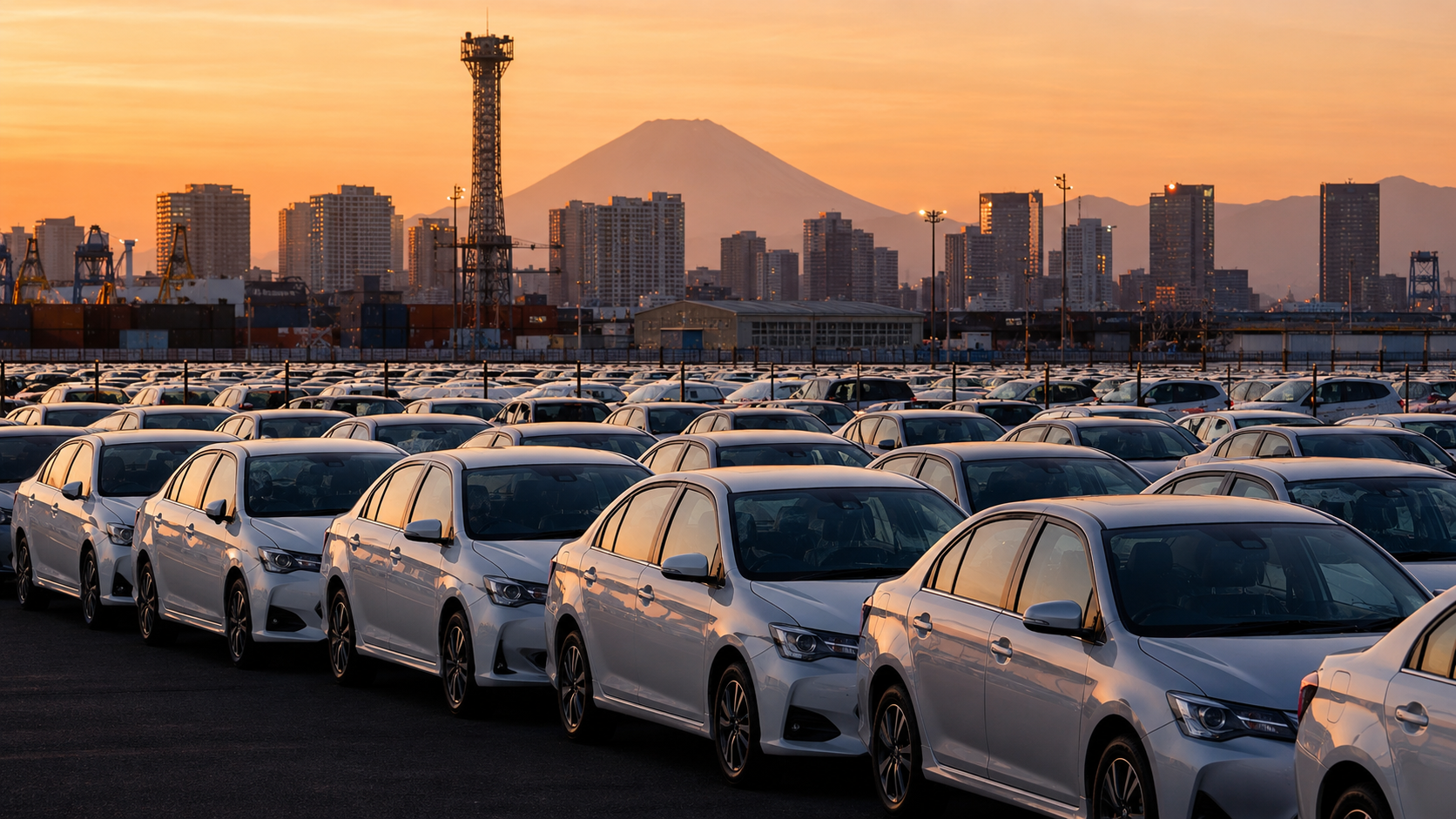
For decades, Japan represented the gold standard of automobile manufacturing. Companies such as Toyota, Honda, Nissan, Mazda, Mitsubishi, Subaru and Suzuki built their international reputations on reliability, fuel efficiency, disciplined production and affordable engineering. Techniques associated with Japanese manufacturing—including lean production, continuous improvement and just-in-time supply chains—were eventually adopted around the world.
Japan remains one of the most important automobile-producing countries, and Japanese brands continue to sell millions of vehicles globally. Toyota, in particular, remains a powerful and profitable international manufacturer. Nevertheless, the basis of competition in the motor industry is changing rapidly. Leadership is no longer determined only by engine quality, mechanical reliability and factory efficiency. Batteries, semiconductors, software, artificial intelligence, connected services and access to critical minerals have become equally important.
This transformation has created serious difficulties for Japan. China has built an enormous electric-vehicle ecosystem, South Korea has strengthened its position in batteries and electronics, European manufacturers are responding to strict emissions regulations, and American companies remain influential in automotive software and autonomous-driving technology. Japan’s traditional strengths have not disappeared, but they no longer guarantee leadership.
Japan’s Former Competitive Advantage
Japan’s automotive success was built primarily around petrol engines, efficient manufacturing and long-lasting vehicles. Japanese manufacturers became particularly successful in North America, Southeast Asia, the Middle East and developing countries, where customers valued durability, fuel economy and low maintenance costs.
Toyota also pioneered commercial hybrid technology with the Prius. This gave Japan an early lead in reducing fuel consumption without requiring drivers to depend entirely on charging infrastructure. Hybrids remain popular and profitable, especially in countries where public charging networks are limited.
However, this success may also have reduced the urgency to move rapidly into fully battery-electric vehicles. Because Japanese companies had invested heavily in hybrid systems and highly efficient internal-combustion engines, they had strong financial and technological reasons to extend the life of those technologies.
That strategy was commercially sensible for many years. The problem is that global automobile demand is increasingly shifting towards fully electric, software-defined vehicles.
Japan Was Slow to Embrace Fully Electric Vehicles
The most important reason for Japan’s present difficulty is its relatively slow transition from conventional and hybrid cars to battery-electric vehicles.
According to the International Energy Agency, global electric-car sales exceeded 20 million in 2025, representing approximately one-quarter of all new cars sold. China alone sold more than 13 million electric cars, and electric vehicles accounted for almost 55 percent of Chinese new-car sales. China was responsible for roughly six out of every ten electric cars sold worldwide in 2025.
Japan’s domestic market moved far more slowly. Electric-car sales remained just above 100,000 in 2025 and represented less than 3 percent of total sales. Conventional hybrids, by comparison, accounted for around one-third of the Japanese market. These figures illustrate the different directions taken by the two countries: China created a mass market for plug-in and battery-electric vehicles, while Japan continued to depend heavily on conventional hybrids.
Japanese manufacturers argue—reasonably—that hybrids can reduce emissions immediately and are more practical in markets without adequate charging facilities. Nevertheless, a manufacturer that sells relatively few battery-electric vehicles may struggle to achieve the same battery-purchasing power, production experience and economies of scale as Chinese competitors.
China’s Enormous Scale Advantage
China’s most important advantage is scale. It has the world’s largest automobile market, the largest electric-vehicle market and an extensive manufacturing base for batteries, motors, electronics, charging equipment and vehicle components.
China’s large domestic demand enables companies to produce vehicles in enormous quantities. High production volumes spread research, tooling and factory costs across millions of vehicles, reducing the cost per unit. Manufacturers can also introduce new models quickly, study consumer response and revise their products faster than companies operating in smaller markets.
The Japan Automobile Manufacturers Association reported that Japan produced approximately 8.23 million motor vehicles in 2024, an 8.5 percent decline from 2023. By contrast, China has established a much larger production base and now dominates global electric-vehicle manufacturing.
China’s scale is also becoming an export advantage. The IEA reported that China accounted for around 40 percent of global electric-car exports in 2024, equivalent to approximately 1.25 million vehicles. In 2025, China overtook traditional automotive exporters in several emerging markets as affordable Chinese electric cars became widely available.
This is especially important for Japanese manufacturers because Southeast Asia has traditionally been one of their strongest regions. Japanese brands still hold a major share of the overall Southeast Asian vehicle market, but Chinese companies are capturing a much larger proportion of the region’s rapidly expanding electric-car segment.
In 2025, Chinese-made vehicles represented approximately three-quarters of Thailand’s electric-car market and about 75 percent of Indonesia’s electric-car sales. Chinese imports also accounted for up to 80 percent of Malaysia’s electric-car market. This places Japanese manufacturers under pressure in countries where they once faced limited competition.
Chinese Companies Control More of the Battery Supply Chain
An electric vehicle is economically and technologically different from a petrol-powered car. Its battery is usually its most expensive component, making battery cost, chemistry and supply-chain security central to competitiveness.
China has developed a highly integrated battery industry covering mineral processing, cathode and anode materials, battery cells, battery packs and recycling. Companies such as CATL and BYD have achieved enormous production volumes and continue to invest in lithium-iron-phosphate and other battery technologies.
According to the IEA, China accounted for approximately 60 percent of global electric-vehicle battery deployment in 2025. This scale gives Chinese manufacturers access to large quantities of batteries, rapidly improving technology and comparatively low costs.
BYD has an additional advantage because it manufactures vehicles, batteries, power electronics and other major components within the same corporate ecosystem. This degree of vertical integration can reduce supply-chain dependence and shorten the period between product development and commercial production.
Japanese automakers possess substantial battery knowledge and are investing in new facilities, including solid-state battery research. However, many of these projects require time before they can achieve mass production. Future breakthroughs may strengthen Japan’s position, but Chinese companies are already producing batteries and vehicles at enormous scale today.
Electric Cars Are Becoming Software Products
Automotive competition is also shifting from mechanical engineering to software engineering. Modern vehicles increasingly depend on operating systems, digital dashboards, advanced driver-assistance systems, over-the-air updates, smartphone integration, artificial intelligence and subscription-based services.
Chinese electric-vehicle manufacturers often design their cars around digital platforms from the beginning. They compete through large interactive screens, voice control, entertainment systems, automated parking, frequent software updates and connectivity with domestic technology ecosystems.
Japanese companies have traditionally been strongest in hardware engineering, quality control and supplier coordination. Their development processes were often divided among manufacturers and specialised component suppliers. That structure worked extremely well when the vehicle was primarily a mechanical product. It is less suitable when software must connect almost every function of the car.
Japan’s Ministry of Economy, Trade and Industry has recognised this challenge through its Mobility Digital Transformation Strategy. The government has emphasised that Japanese manufacturers must improve their position in software-defined vehicles, automated driving and the collection and use of mobility data.
The challenge is not simply hiring more software engineers. Companies must also change their organisational structures, shorten development cycles and treat software as an evolving service rather than a fixed component completed before the vehicle leaves the factory.
Chinese Manufacturers Develop New Models More Quickly
Product-development speed has become another competitive factor. Traditional Japanese manufacturers are known for extensive testing and cautious decision-making. This protects quality and reliability, but it can make development slower.
Chinese electric-vehicle companies frequently introduce new or updated models in shorter cycles. They can modify batteries, digital systems, interiors and driver-assistance features quickly in response to customer feedback.
This faster approach is particularly effective in the Chinese market, where consumers often expect frequent technological improvements. A digital feature that is attractive today may appear outdated within two years. Therefore, a manufacturer following a traditional five- or six-year model cycle may struggle against companies that update software continuously and refresh vehicle designs more frequently.
Japan’s consensus-based corporate culture can also slow major strategic decisions. Investment proposals may pass through several organisational layers, while different suppliers are responsible for separate systems. Chinese manufacturers operating with more centralised management can sometimes make investment and product decisions more quickly.
Price Competition Is Intensifying
Chinese electric vehicles are no longer competing only at the lower end of the market. Companies such as BYD, Geely, SAIC, Nio, XPeng and Li Auto cover a wide range of segments, from compact city cars to premium electric sedans and sport-utility vehicles.
Competition within China is extremely intense. Manufacturers regularly reduce prices, introduce additional features and improve driving range. Although this price war has placed financial pressure on some Chinese companies, it has also forced the strongest manufacturers to become highly cost-efficient.
The IEA has reported that more than half of the electric cars sold in China in recent years were less expensive than comparable internal-combustion models. Falling battery prices, high factory utilisation and integrated supply chains have made electric cars accessible to a much wider group of consumers.
Japanese vehicles generally enjoy a strong reputation for quality, but they may appear expensive when a Chinese electric car offers a large battery, advanced digital features and a modern interior at a lower price. This is becoming especially important in price-sensitive markets across Southeast Asia, Latin America, the Middle East and parts of Europe.
Japan’s Domestic Market Provides Limited Pressure for Change
Japan’s relatively weak domestic demand for fully electric vehicles creates another obstacle. In 2025, electric cars accounted for less than 3 percent of Japanese vehicle sales. Limited residential charging is one reason: a significant proportion of the population lives in apartments where installing private chargers can be difficult.
Japan also has an efficient public-transport system, a declining population and an aging society. These conditions restrict the long-term growth of domestic automobile demand.
Moreover, kei cars—small, affordable vehicles designed for Japanese roads and tax rules—represent an important part of the domestic market. Electrifying these cars at an acceptable price is challenging because battery costs can account for a large percentage of the total vehicle price.
A weak domestic electric-car market means Japanese companies receive less immediate pressure and less large-scale consumer data than manufacturers in China. Chinese companies can test products in a vast and highly competitive domestic environment before exporting them.
Dependence on Export Markets Creates Trade Risks
The Japanese automobile industry remains highly dependent on overseas markets. The sector accounts for roughly 20 percent of Japan’s exports and approximately 10 percent of national employment, according to Japan’s Ministry of Economy, Trade and Industry.
The United States remains especially important. JAMA reported in March 2025 that the US accounted for approximately 30 percent of Japan’s total automobile exports by value. This exposure makes Japanese manufacturers vulnerable to tariffs, local-content rules, exchange-rate movements and political pressure to shift production abroad.
Japanese companies have responded by building factories in the United States, Mexico, Europe and Southeast Asia. In fact, Japanese-brand companies manufacture more vehicles in the United States than Japan exports there. Local production reduces some trade risk, but it also means that Japan itself may lose domestic factory activity, supplier employment and technological investment.
China faces tariffs and trade restrictions as well, particularly in the United States and Europe. Nevertheless, it is diversifying through factories and partnerships in Thailand, Indonesia, Hungary, Brazil, Mexico and other markets.
Scandals and Production Disruptions Have Damaged Confidence
Japan’s motor industry has also faced certification and testing controversies involving several manufacturers. Problems connected with vehicle testing, emissions data and regulatory certification resulted in investigations and temporary production suspensions.
These incidents do not mean Japanese vehicles have suddenly become unreliable. However, they are damaging because Japan’s strongest international asset is trust in its engineering and quality-control systems.
Production interruptions have also affected output. JAMA reported that Japanese motor-vehicle production fell by 8.5 percent in 2024. Repeated shutdowns can weaken suppliers, raise costs and delay vehicle deliveries at a time when overseas competitors are expanding rapidly.
Japan Still Has Important Strengths
It would be incorrect to conclude that Japan’s automotive industry is facing inevitable decline. Japanese manufacturers retain major advantages in hybrid systems, manufacturing quality, global distribution, supplier relationships, safety, brand recognition and after-sales service.
Toyota’s multi-technology strategy has also protected it during periods when electric-car demand grew more slowly in certain markets. Hybrids remain highly relevant in countries with unreliable electricity systems or insufficient charging networks. Japanese firms are investing in batteries, hydrogen, solid-state technology, electric platforms and software-defined vehicles.
Japan’s challenge is therefore not survival but adaptation. Its manufacturers must preserve reliability while becoming faster in batteries and software. They need affordable electric models, stronger control over supply chains and shorter development cycles. Greater collaboration between carmakers, battery producers, semiconductor companies and software businesses will be essential.
Conclusion
Japan’s motor industry is struggling not because its companies have forgotten how to build good cars, but because the definition of a good car is changing. Mechanical durability and manufacturing precision remain important, yet consumers and governments increasingly demand battery range, digital features, connectivity, low emissions and competitive prices.
China moved earlier and more aggressively to build a complete electric-vehicle ecosystem. Its manufacturers benefit from enormous domestic demand, integrated battery production, government support, rapid product development and fierce price competition. These advantages are now being converted into export growth, including in markets traditionally dominated by Japan.
Japanese manufacturers still possess valuable technology, globally respected brands and extensive production networks. However, they must move more quickly from defending their success in petrol and hybrid vehicles to competing directly in electric, connected and software-defined mobility. If Japan can combine its traditional strengths in quality with faster innovation in batteries and software, it can remain a global automotive power. If the transition remains slow, China and other competitors will continue capturing the fastest-growing sections of the international market.
References
- International Energy Agency, Global EV Outlook 2026: Trends in Electric Cars.
- International Energy Agency, Global EV Outlook 2026: Executive Summary.
- International Energy Agency, Electric-Vehicle Batteries—Global EV Outlook 2026.
- International Energy Agency, Global EV Outlook 2025.
- International Energy Agency, Trends in the Electric-Car Industry—Global EV Outlook 2025.
- International Energy Agency, Outlook for Electric Mobility—Global EV Outlook 2025.
- Japan Automobile Manufacturers Association, The Motor Industry of Japan 2025.
- Japan Automobile Manufacturers Association, Motor Industry of Japan—Annual Reports.
- Japan Automobile Manufacturers Association, March 2025 Press Conference.
- Japan Automobile Manufacturers Association, Comment on US Tariff Measures on Imported Automobiles and Parts.
- Ministry of Economy, Trade and Industry of Japan, Mobility Digital Transformation Strategy.
- Ministry of Economy, Trade and Industry of Japan, Technology Roadmap for Transition Finance in the Automobile Sector.
- BYD, Company Introduction and Business Overview.
- Toyota Motor Corporation, Toyota’s Battery-Electric Vehicle Strategy and Technology.