Muhammad Abdullah Hasan
Executive Summary
Oil-dependent economies are approaching one of the most important transformations in their modern history. By 2050, petroleum is unlikely to disappear from the global economy, but its role, markets and profitability may differ significantly from those of today. Electric vehicles, renewable energy, energy-efficiency improvements, climate policies and changing consumer behaviour are already reshaping demand. At the same time, aviation, shipping, petrochemicals and rapidly growing developing economies could continue supporting substantial oil consumption.
The scale of this uncertainty is demonstrated by sharply different forecasts. The International Energy Agency’s scenarios range from declining oil consumption under a net-zero pathway to demand of approximately 113 million barrels per day in 2050 if current policies remain broadly unchanged. In contrast, OPEC’s 2026 outlook expects demand to reach about 124 million barrels per day by 2050, with no global peak before then.
The future of oil-based economies will therefore not be determined simply by whether petroleum demand rises or falls. It will depend on production costs, emissions intensity, fiscal management, institutional quality, investment in human capital and the ability to build competitive industries outside the oil sector. Countries that use today’s petroleum income to finance productive transformation could remain prosperous in 2050. Those that continue treating oil revenue as a permanent substitute for taxation, private enterprise and innovation may face budget crises, unemployment and social instability.
Oil Will Remain Important—but Its Dominance Will Weaken
Oil currently supports transportation, manufacturing, agriculture, construction, aviation, shipping and the petrochemical industry. It is used not only to produce petrol and diesel but also in plastics, fertilizers, medicines, lubricants, synthetic fibres, asphalt and numerous industrial products.
This diversity means that oil will not suddenly become commercially useless. Even a rapid expansion of electric vehicles would not eliminate demand from aviation, petrochemicals, heavy transport and other difficult-to-electrify sectors. Developing countries experiencing population growth, urbanization and rising incomes could also require more transport fuel and industrial materials.
Nevertheless, petroleum will face growing competition. Renewable electricity is becoming increasingly affordable. According to the International Renewable Energy Agency, the global average generation cost of utility-scale solar photovoltaic electricity fell to approximately $0.044 per kilowatt-hour in 2023, while onshore wind averaged about $0.033 per kilowatt-hour. Continued cost reductions in batteries, electric vehicles and renewable power will gradually weaken oil’s position in road transportation and parts of industry.
Consequently, the critical question is not whether oil will still be used in 2050—it almost certainly will—but how much will be required, where it will be consumed and which producers will be able to supply it profitably.
Competing Visions of Oil Demand in 2050
Long-term energy projections should be treated as scenarios rather than precise predictions. They are influenced by assumptions about economic growth, government policy, technology, geopolitics and consumer behaviour.
The International Energy Agency’s 2025 Stated Policies Scenario suggests that global oil demand reaches a peak of about 102 million barrels per day around 2030 before gradually declining. It expects electric vehicles to displace significant petroleum demand, although aviation and petrochemical consumption continue increasing.
Under the IEA’s Current Policies Scenario, however, oil demand rises to approximately 113 million barrels per day by 2050. This higher outcome assumes weaker climate policies and slower adoption of electric vehicles in many developing markets.
OPEC presents an even stronger outlook. Its 2026 World Oil Outlook projects global demand of around 124 million barrels per day by 2050 and does not foresee an overall demand peak before that date. OPEC attributes continued growth particularly to expanding populations, industrial development and increasing energy needs outside the wealthy OECD economies.
These differences show that the future is not predetermined. Oil demand in 2050 will be shaped by political and technological choices made during the next two decades. Oil-exporting governments must therefore prepare for several possible outcomes instead of building national budgets around a single optimistic forecast.
Low-Cost Producers May Gain Market Share
If worldwide demand declines, all producers will not be affected equally. Competition for a smaller market would favour countries with large, easily accessible reserves, low production costs and efficient export infrastructure.
Several Middle Eastern producers have an important advantage because their oil can be extracted relatively cheaply. High-cost projects—including some deep-water developments, mature fields and unconventional resources—could become uneconomic if prices remain low or demand contracts.
This could create a paradox: total global oil consumption might decline while the market share of certain major Gulf producers increases. The last barrels demanded by the global economy are likely to come from suppliers that can deliver them at the lowest financial and environmental cost.
However, low production costs alone will not guarantee national prosperity. A country may extract oil for less than $20 per barrel but still need a much higher price to balance its government budget. Public-sector salaries, subsidies, infrastructure programmes and social benefits can produce a high “fiscal break-even” price. Fiscal reform will therefore be as important as efficient oil production.
The Growing Importance of Low-Carbon Oil
By 2050, buyers may increasingly distinguish between petroleum supplies according to their environmental footprint. Oil produced with methane leakage, routine gas flaring or energy-intensive extraction could face regulatory penalties, higher financing costs or reduced market access.
Producers that control methane emissions, end routine flaring, electrify production facilities and use carbon-management technology may retain a competitive advantage. Reliable measurement and transparent reporting of emissions could become essential conditions for selling petroleum in tightly regulated markets.
This development will not make oil carbon-free. Most petroleum-related emissions occur when fuels are consumed, not when crude oil is extracted. Nevertheless, reducing operational emissions could determine which producers remain acceptable to governments, lenders and international buyers during the transition.
National oil companies will consequently need to evolve. Their future may include natural gas, renewable electricity, hydrogen, carbon capture, energy storage and advanced petrochemicals alongside conventional petroleum production.
Petrochemicals Could Become More Important
As electric vehicles reduce demand for petrol and diesel, oil companies and exporting nations are likely to place greater emphasis on petrochemicals. Petroleum and natural-gas liquids are important feedstocks for plastics, chemicals, packaging, textiles, medical equipment and industrial materials.
Integrated refining and petrochemical complexes could capture more value than simply exporting crude oil. Countries such as Saudi Arabia and the United Arab Emirates are already investing in downstream industries to increase domestic value addition.
Yet petrochemicals are not a risk-free replacement for transport fuels. Governments are introducing restrictions on single-use plastics, promoting recycling and developing bio-based alternatives. A large global expansion in petrochemical capacity could also create oversupply and lower profit margins. Oil economies should therefore treat petrochemicals as one component of diversification, rather than as a complete solution.
Public Finances Face the Greatest Risk
The most immediate threat to oil-dependent economies is not necessarily a complete collapse in demand. It is sustained revenue volatility.
Oil prices have historically experienced dramatic rises and falls. When prices are high, governments often expand public employment, subsidies and construction spending. When prices decline, they are forced to borrow, reduce investment or withdraw financial reserves.
By 2050, market volatility could become more severe. Underinvestment in production might periodically create supply shortages and price spikes, while rapid adoption of clean technology could produce periods of oversupply and falling prices. Geopolitical conflicts and disruptions to shipping routes would add further uncertainty.
Governments can reduce this vulnerability through conservative budget assumptions, limits on public debt, stronger non-oil taxation and transparent sovereign wealth funds. Petroleum income should increasingly be treated as proceeds from the conversion of a finite national asset—not as ordinary recurring revenue.
Well-managed sovereign funds can transform underground resources into diversified financial wealth. However, their effectiveness depends on professional management, public accountability and protection from politically motivated withdrawals.
Diversification Must Produce Exports and Employment
Nearly every oil-exporting government now speaks about diversification, but diversification is more difficult than announcing construction projects or establishing new government-controlled companies.
A genuinely diversified economy must produce competitive goods and services, attract private investment, generate exports and create sustainable employment. Possible growth sectors vary by country but may include tourism, logistics, financial services, mining, agriculture, digital services, manufacturing, healthcare, education and renewable-energy industries.
The International Monetary Fund emphasizes that successful diversification requires human-capital development, infrastructure, reduced trade barriers and deeper integration into international commerce. Research also indicates that economies with more diversified exports are generally better able to withstand petroleum-market shocks.
Government investment can help new industries emerge, but excessive state intervention can suppress competition. Private firms need predictable regulations, reliable courts, accessible financing and freedom to enter markets. Connections to political authorities should not determine which businesses succeed.
Employment and the Future Social Contract
Oil industries generate large revenues but usually employ a relatively small share of the national workforce. In many exporting countries, governments have distributed petroleum income through public-sector jobs, subsidized energy, free services and low taxation.
This system will become increasingly difficult to sustain as young populations enter the labour market. Governments cannot indefinitely serve as employers of first resort, especially if petroleum revenue becomes uncertain.
The transition will require a new relationship between citizens and the state. Authorities may need to introduce or expand taxation while improving accountability and public-service quality. Energy subsidies should be gradually replaced with targeted support for vulnerable households. Education systems must move beyond the distribution of qualifications and develop practical skills required by private employers.
Women’s economic participation will also be important. Countries cannot maximize productivity while a significant portion of their educated population remains outside the workforce.
Renewable Energy Is an Opportunity for Producers
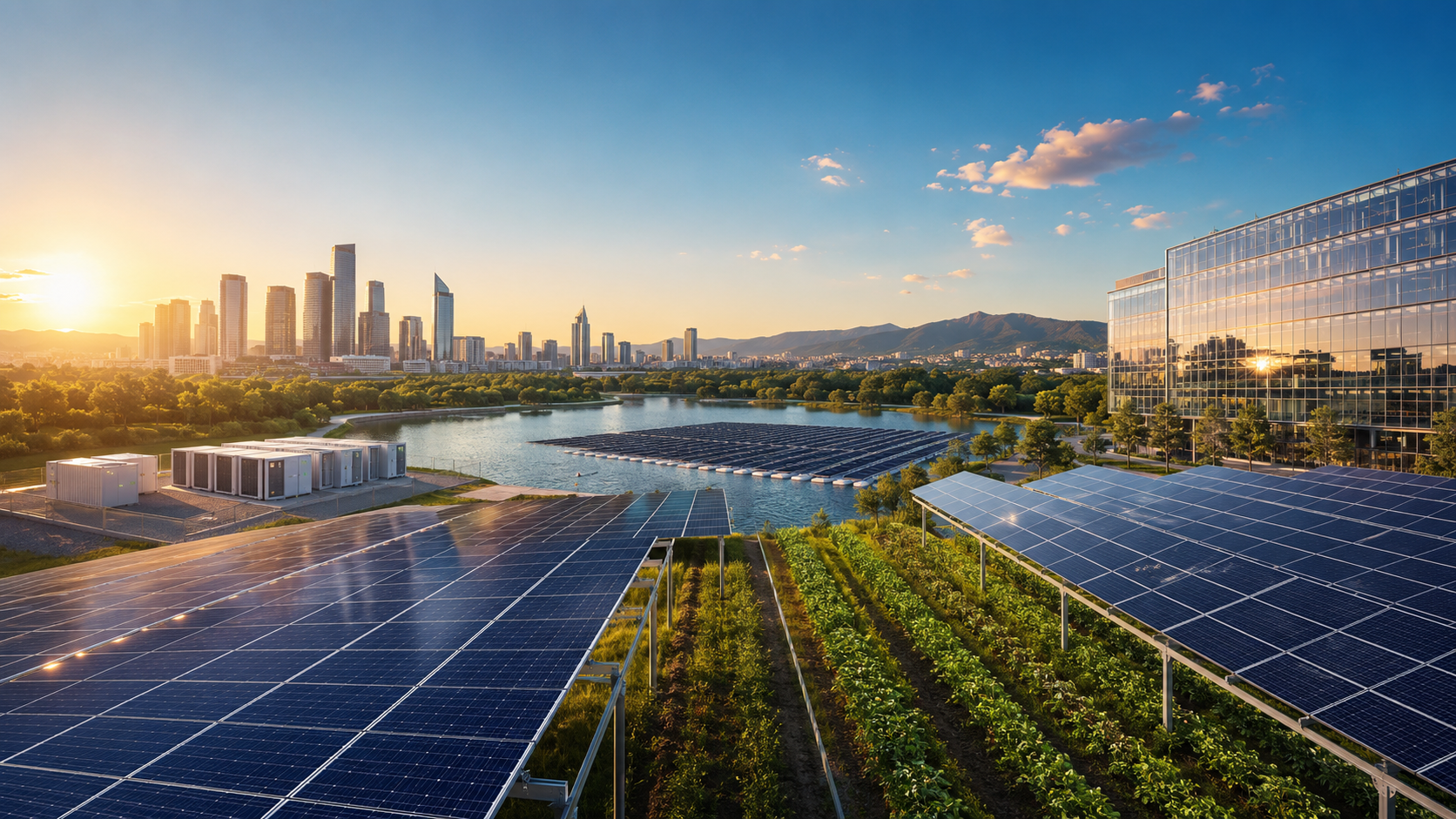
Oil-exporting countries should not view renewable energy only as a threat. Many possess excellent solar resources, large areas of available land, existing energy infrastructure and substantial investment capital.
Installing solar and wind power domestically could reduce the consumption of oil and gas in electricity generation, leaving more hydrocarbons available for export during the transition. Cheap renewable electricity could also support desalination, mineral processing, data centres, low-carbon manufacturing and, eventually, hydrogen production.
Some producers may become exporters of low-carbon hydrogen or hydrogen-derived products such as ammonia. However, these industries require enormous investment, infrastructure and dependable buyers. Governments should avoid assuming that hydrogen revenue will automatically replace petroleum income. Projects must be based on realistic costs and firm market demand.
Different Producers Will Experience Different Futures
Wealthy Gulf states enter the transition with significant advantages: financial reserves, modern infrastructure, relatively small citizen populations and access to low-cost petroleum. They have the strongest capacity to finance economic transformation, although large development projects can still waste resources if commercial discipline is weak.
More populous exporters such as Nigeria, Algeria, Iraq and Angola face a harder challenge. They must create millions of jobs while dealing with infrastructure gaps, governance weaknesses and limited fiscal space. For these countries, delayed reform could carry serious social consequences.
Russia, Iran and Venezuela possess major reserves but face additional constraints associated with sanctions, geopolitical isolation, technological access and investment conditions. Canada, Norway and the United States have more diversified economies, although particular provinces, states and communities remain heavily exposed to the petroleum sector.
Three Possible Outcomes by 2050
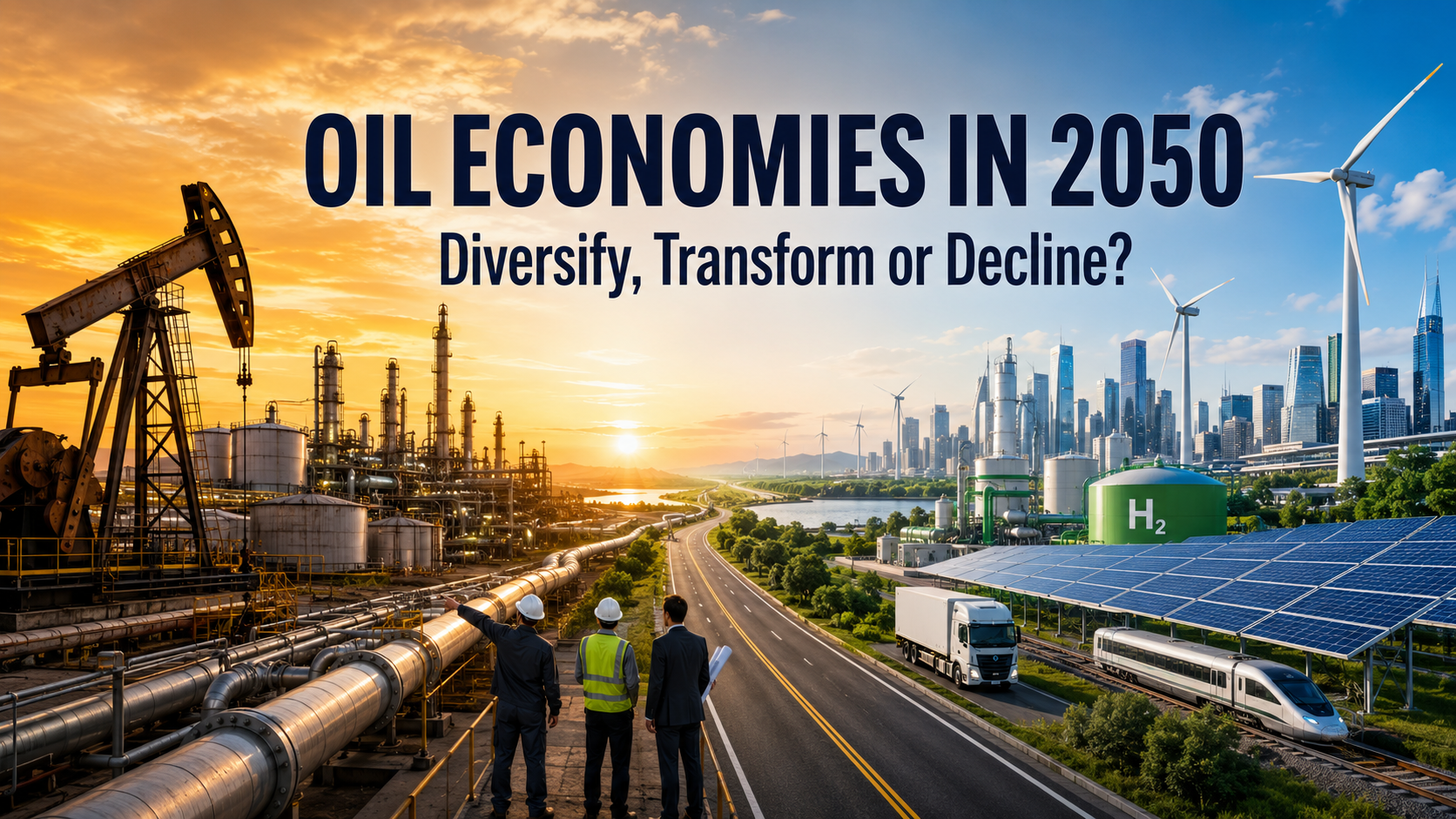
By the middle of the century, oil economies could broadly follow three paths:
Successful transformation: Petroleum revenue finances education, infrastructure, financial assets and competitive new industries. Oil remains part of the economy but no longer dominates public revenue or employment.
Managed dependence: Oil exports remain profitable, particularly for low-cost producers, but diversification progresses slowly. Governments remain exposed to market fluctuations yet retain enough reserves to manage periodic shocks.
Disorderly adjustment: Demand or prices fall faster than expected, while governments have high debt, weak institutions and oversized public sectors. Budget cuts, unemployment, currency pressure and political unrest reinforce one another.
Most countries will fall somewhere between these categories. Their position will depend less on the amount of oil underground than on the quality of decisions made before 2050.
Conclusion
Oil-based economies are not destined to collapse, but they cannot safely assume that the economic model of the twentieth century will survive unchanged. Petroleum will probably remain valuable for aviation, shipping, petrochemicals and industrial uses. Nevertheless, electrification, renewable energy and climate policy will steadily weaken its dominance and intensify competition among producers.
The strongest oil economies of 2050 will not necessarily be those with the largest reserves. They will be countries that produce efficiently, reduce operational emissions, control public spending, invest petroleum income wisely and build productive non-oil sectors.
The next two decades represent a limited window of opportunity. Diversification becomes much harder after revenues have already declined. Oil wealth can still finance a prosperous post-oil future—but only if governments begin treating transformation as an urgent national programme rather than a distant ambition.
Complete References
- International Energy Agency. World Energy Outlook 2025. Paris: IEA, 2025. IEA World Energy Outlook 2025
- International Energy Agency. Stated Policies Scenario—World Energy Outlook 2025. IEA Stated Policies Scenario
- International Energy Agency. Current Policies Scenario—World Energy Outlook 2025. IEA Current Policies Scenario
- International Energy Agency. Net Zero by 2050: A Roadmap for the Global Energy Sector. Paris: IEA, 2021. IEA Net Zero by 2050
- Organization of the Petroleum Exporting Countries. World Oil Outlook 2026. Vienna: OPEC, 2026. OPEC World Oil Outlook
- International Renewable Energy Agency. Renewable Power Generation Costs in 2023. Abu Dhabi: IRENA, 2024. IRENA cost report
- International Renewable Energy Agency. World Energy Transitions Outlook 2024: 1.5°C Pathway. Abu Dhabi: IRENA, 2024. IRENA Energy Transitions Outlook
- International Monetary Fund. Economic Diversification in Developing Countries: Lessons from Country Experiences. Washington, D.C.: IMF, 2024. IMF diversification report
- International Monetary Fund. Economic Diversification in Oil-Exporting Arab Countries. Washington, D.C.: IMF, 2016. IMF oil-exporter report
- Karanfil, F. et al. “The Energy Transition and Export Diversification in Oil-Dependent Countries.” Ecological Economics, 2023. Research article