International petroleum prices influence almost every sector of the global economy. When crude-oil prices rise or fall sharply, the effects are felt far beyond petrol stations. Transport fares, electricity generation, food production, industrial costs, inflation, government budgets and foreign-exchange reserves can all be affected.
Poor and developing countries are particularly vulnerable because many depend heavily on imported fuel, have limited financial reserves and lack strong social-protection systems. Their households also spend a large proportion of their income on food, transportation and other essential goods. Consequently, an international oil-price shock can quickly become a cost-of-living, fiscal and balance-of-payments crisis.
Why petroleum prices fluctuate
International petroleum prices are determined by a complex interaction of global supply and demand. Prices can change because of:
- Wars, political instability and sanctions affecting oil-producing regions
- Production decisions by OPEC and other major exporters
- Disruption of shipping routes, pipelines or refineries
- Changes in global economic growth
- Natural disasters and extreme weather
- Currency movements, particularly changes in the US dollar
- Commercial inventories and spare production capacity
- Financial-market expectations and speculation
- Technological changes and the transition towards renewable energy
A rapidly growing world economy generally increases demand for transport and industrial energy, placing upward pressure on oil prices. Conversely, recessions can reduce demand and produce sharp price declines. Supply disruptions can cause prices to rise even when global demand is weak.
For developing countries, the problem is not simply whether oil is expensive or cheap. Sudden and unpredictable changes make it extremely difficult for governments, businesses and households to plan.
Rising import bills and pressure on foreign exchange
Most poor countries are net importers of petroleum. They must purchase crude oil, petrol, diesel, aviation fuel or liquefied petroleum gas in international markets, normally using US dollars.
When petroleum prices rise, these countries require more foreign currency to import the same quantity of fuel. The resulting increase in the import bill can widen the current-account deficit and weaken the overall balance of payments.
The IMF has documented how food and fuel shocks can place severe pressure on the external accounts of low-income countries. The impact depends particularly on the size of petroleum imports relative to exports and foreign-exchange reserves. Countries with narrow export bases, heavy debt obligations and limited reserves are among the most exposed.
If export earnings and remittances cannot cover the additional cost, governments may have to draw down their reserves, borrow externally or restrict imports. A shortage of foreign currency can then affect imports of medicines, machinery, food and industrial raw materials—not only petroleum.
Currency depreciation creates a second price shock
A larger fuel-import bill can weaken the national currency. Depreciation makes every dollar-priced import more expensive in local currency, including petroleum itself.
This creates a damaging cycle:
- International petroleum prices rise.
- The country spends more foreign exchange on fuel.
- Foreign-exchange reserves decline.
- The domestic currency comes under pressure.
- Imported fuel becomes even more expensive in local currency.
- Inflation rises and further weakens economic confidence.
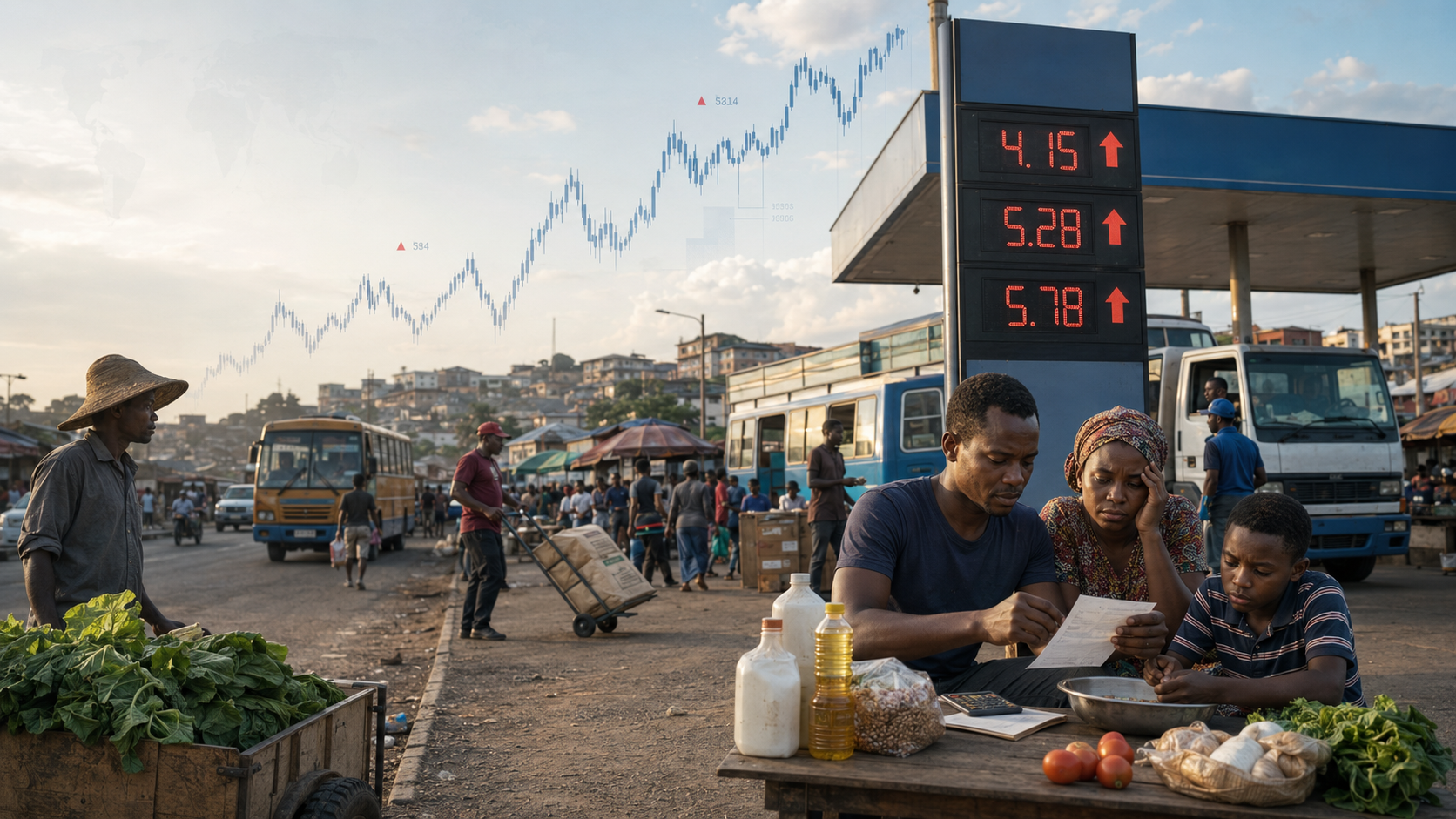
For this reason, consumers in a developing country may experience a much larger fuel-price increase than the original change in the international price. A 15 percent rise in the dollar price of petroleum, combined with a 10 percent depreciation of the national currency, can produce a considerably greater local-currency burden.
Inflation spreads across the economy
Petroleum is both a consumer product and a major input into production. Higher petrol and diesel prices directly affect people who own vehicles, but the indirect effects are much broader.
Buses, trucks, tractors, fishing boats, generators and construction machinery all require fuel. When their operating costs rise, businesses generally pass at least part of the increase on to consumers.
The World Bank notes that oil-price shocks feed directly into inflation through energy costs and indirectly through transportation, fertilizer and production expenses. The effect can be stronger in developing economies because their supply chains are less efficient and inflation expectations are often more sensitive to fuel-price movements.
Higher energy costs may therefore increase the prices of:
- Public transportation
- Food and agricultural products
- Construction materials
- Manufactured goods
- Electricity produced from diesel or fuel oil
- Delivery and distribution services
- School and healthcare transportation
- Imported consumer goods
Even households that do not own a vehicle are affected through higher bus fares, food prices and electricity charges.
Poor households suffer disproportionately
Low-income families have little room in their budgets for unexpected price increases. Most of their income is spent on essential items such as food, rent, transportation, cooking fuel, medicine and education.
According to the IMF, food represents about 43 percent of average consumption in low-income developing countries, compared with approximately 25 percent in emerging markets and 12 percent in advanced economies. This makes poorer households especially vulnerable when energy costs push up food prices.
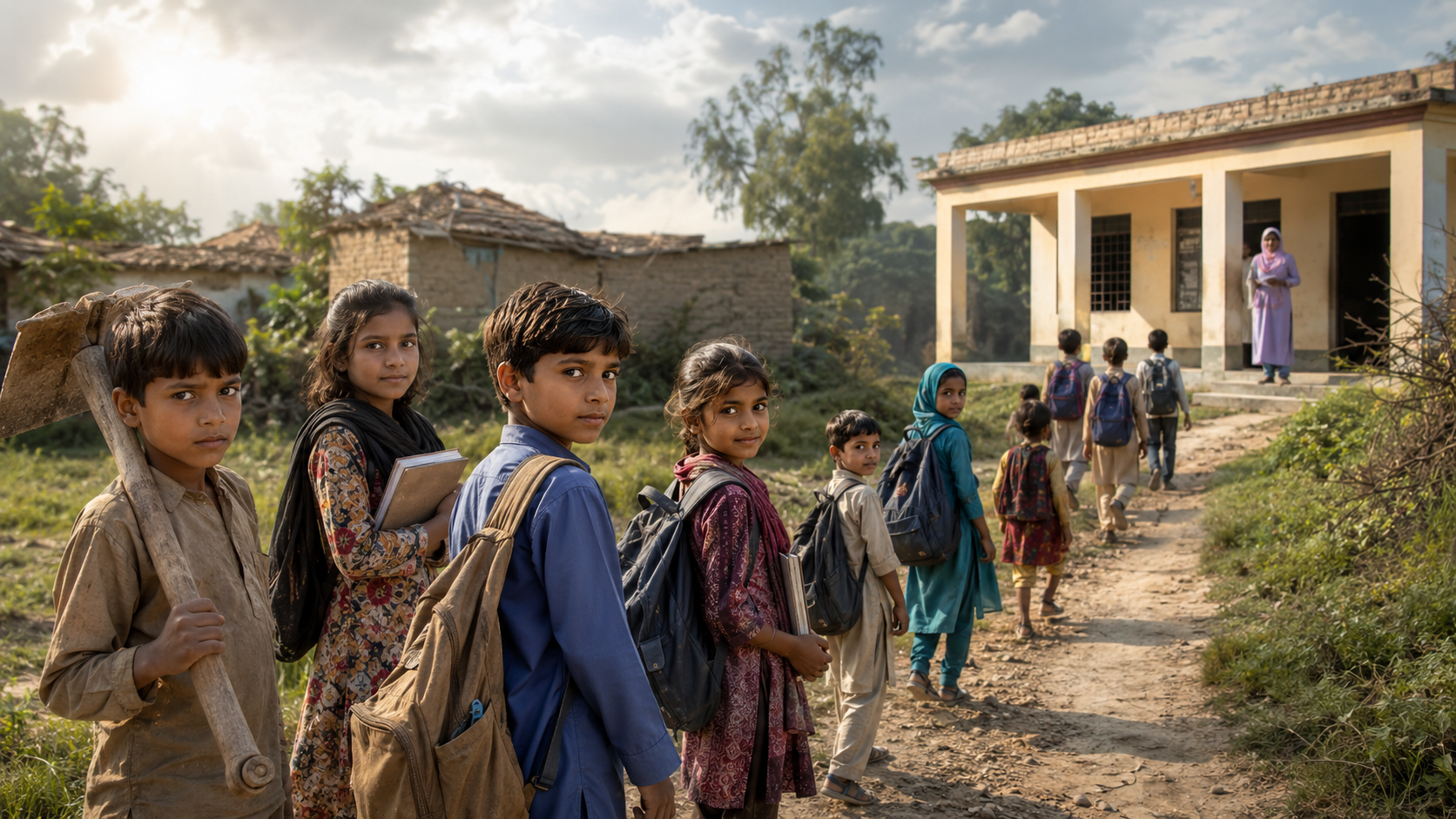
A wealthy household may respond to higher fuel prices by reducing non-essential travel or entertainment. A poor household may have to remove nutritious foods from its diet, delay medical treatment, take children out of school or borrow money for daily expenses.
Inflation also reduces the real value of wages and cash savings. Unless wages and social benefits rise with prices, families can purchase fewer goods with the same amount of money. Informal workers, pensioners and households dependent on fixed incomes are particularly exposed.
Agriculture and food security
Agriculture is highly sensitive to petroleum-price fluctuations. Farmers use diesel for tractors, irrigation pumps, harvesting machinery and transporting produce. Fuel is also required to move seeds, fertilizer and other inputs to farms and to deliver crops to markets.
Energy prices can influence fertilizer costs as well. The UN Food and Agriculture Organization has described how farmers can face a dual shock involving more expensive fertilizer and higher fuel costs throughout irrigation, production, processing and transportation.
When input costs rise, small farmers may:
- Apply less fertilizer
- Reduce the area under cultivation
- Switch to lower-cost crops
- Delay investment in machinery or irrigation
- Charge more for their produce
- Abandon farming if production becomes unprofitable
Reduced fertilizer use can lower future crop yields, meaning the consequences may continue even after petroleum prices stabilize. Rising transportation costs also widen the gap between the price received by a farmer and the final retail price paid by a consumer. This problem is especially serious where roads, storage facilities and transport systems are inefficient.
The result can be higher food prices, reduced agricultural production and greater food insecurity among both rural and urban families.
Damage to small businesses and employment
Small enterprises form a major part of employment in developing countries. Many rely directly or indirectly on petroleum products.
Taxi operators, bus owners, fishermen, farmers, manufacturers, delivery businesses and shopkeepers experience higher operating costs when fuel prices rise. Unlike large companies, small enterprises may lack savings, affordable credit and the ability to negotiate lower input prices.
If customers cannot afford higher prices, businesses may be forced to absorb some of the increased costs. Their profits decline, leaving less money for wages, expansion and maintenance. Some employers reduce working hours, dismiss employees or close altogether.
Higher energy costs can also make a country’s exports less competitive. Manufacturers paying more for transportation, electricity and imported materials may lose international orders to producers in countries with cheaper or more reliable energy.
The difficult choice between subsidies and higher prices
Governments frequently try to protect consumers by subsidizing fuel or controlling retail prices. This can provide temporary relief, prevent transport fares from increasing immediately and reduce political unrest.
However, maintaining a fixed domestic price while international prices rise can become extremely expensive. The government must either compensate fuel suppliers, reduce petroleum taxes or force state-owned energy companies to operate at a loss.
The IEA reported that global fossil-fuel consumption subsidies exceeded $1 trillion in 2022 as governments attempted to protect consumers from international energy-market disruptions. Such spending is particularly difficult for poor countries with limited tax revenue.
Universal fuel subsidies also tend to benefit wealthier households disproportionately because they generally own more vehicles and consume more fuel. Meanwhile, the money spent subsidizing every litre of fuel cannot be used for hospitals, schools, clean water, public transport or targeted assistance.
If governments finance subsidies through borrowing, public debt and interest costs rise. If they finance them by creating money, inflation may worsen. If subsidies are removed suddenly, however, transport and food prices can jump, provoking hardship and public opposition.
Higher interest rates and slower economic growth
Central banks may respond to oil-driven inflation by raising interest rates. Higher rates can help control demand and support the currency, but they also make borrowing more expensive.
Businesses may postpone investments, construction may slow and households may find loans unaffordable. Governments with large domestic debts must devote more revenue to interest payments.
The combination of higher import costs, inflation, tighter monetary policy and weaker consumer demand slows economic growth. IMF research suggests that a 25 percent oil-price increase typically reduces the GDP of an importing economy by about half a percentage point or less, although the effect varies considerably according to the size of its oil imports and other external income.
For fragile, indebted or extremely import-dependent countries, the consequences can be substantially more serious.
Oil-exporting developing countries face the opposite risk
Some poor and developing countries export petroleum. They may initially benefit from higher international prices through increased export earnings, tax revenue and foreign-exchange reserves.
Nevertheless, price volatility remains dangerous. Governments can become dependent on oil income and increase public spending during boom periods. When prices suddenly fall, revenue collapses while salaries, subsidies and development commitments remain.
UN Trade and Development warns that commodity-dependent economies frequently experience revenue volatility, weak productivity and difficulty achieving sustainable human development. A petroleum-price collapse can force an exporting government to cut spending on education, healthcare and infrastructure or accumulate new debt.
Therefore, both importing and exporting developing countries are vulnerable—but through different channels.
Do lower petroleum prices always help poor countries?
Lower prices normally benefit oil-importing countries by reducing import costs, inflation and pressure on foreign-exchange reserves. Transport and production may become cheaper, while governments can reduce subsidy expenditure.
However, the benefits may not reach consumers fully. Currency depreciation, taxes, weak competition, high distribution costs or government decisions to rebuild revenue can keep domestic prices elevated.
Lower prices can also harm petroleum exporters and countries that depend on employment or remittances from oil-producing states. Migrant workers may lose jobs when energy-exporting economies cut construction and public spending, reducing remittance flows to their home countries.
Rapid fluctuation is therefore harmful even when the average price appears manageable. Stability is often more valuable for economic planning than a short period of exceptionally cheap fuel.
Policies that can reduce vulnerability
Poor countries cannot control international petroleum prices, but they can reduce their exposure.
Target assistance towards vulnerable families
Instead of maintaining expensive universal fuel subsidies indefinitely, governments can use targeted cash transfers, transport support or food assistance. World Bank research finds that targeted transfers allow assistance to reach vulnerable groups more efficiently than subsidies provided to all fuel consumers.
Build financial and strategic reserves
Foreign-exchange reserves and strategic petroleum stocks provide temporary protection during supply disruptions. Transparent stabilization funds can also help commodity exporters save part of their earnings during periods of high prices.
Improve public transportation
Reliable buses, rail systems and non-motorized transport reduce household dependence on private vehicles and imported fuel. They also protect urban mobility when petroleum prices rise.
Increase energy efficiency
Fuel-efficient vehicles, better logistics, improved roads, modern irrigation systems and energy-efficient machinery can reduce petroleum consumption without reducing economic activity.
Diversify energy supplies
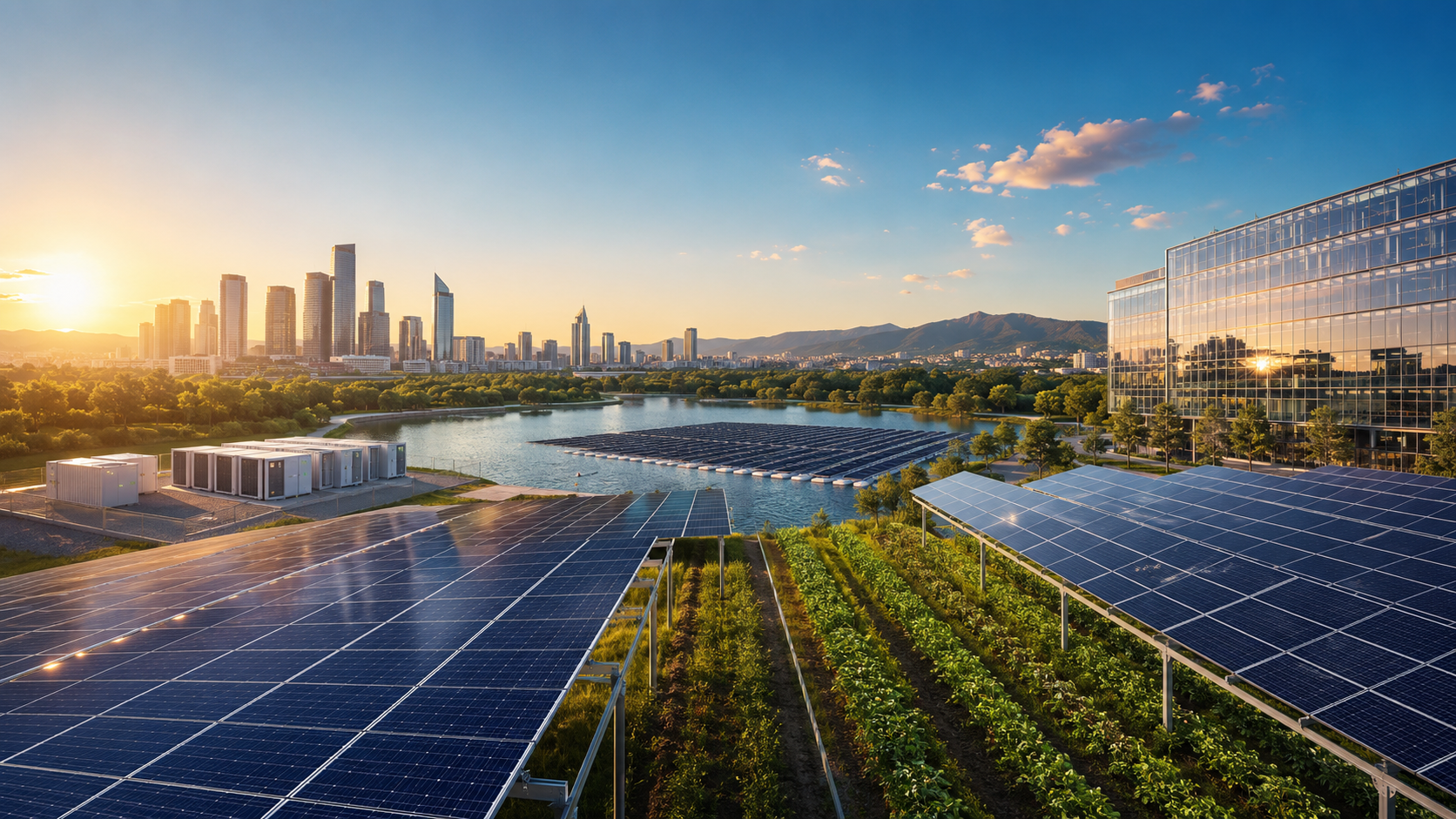
Investment in domestic solar, wind, hydropower and other suitable energy sources can reduce exposure to imported fossil fuels. The IEA estimates that stronger clean-energy policies could substantially reduce the future fossil-fuel import bills of developing regions.
Diversify the broader economy
Oil exporters need industries and revenue sources outside petroleum, while importers need competitive exports capable of earning foreign currency. Economic diversification makes both groups more resilient to commodity shocks.
Maintain transparent pricing
Clear pricing formulas and gradual adjustments help households and businesses prepare for changes. Sudden, politically determined price increases create uncertainty and can undermine public trust.
Conclusion
Fluctuations in international petroleum prices are not merely changes on a commodity-market screen. In poor countries, they influence the price of food, the cost of reaching work or school, the viability of farms and small businesses, the value of the national currency and the government’s ability to finance essential services.
Rising petroleum prices are especially harmful to import-dependent economies because they increase foreign-exchange needs, worsen inflation and reduce household purchasing power. Falling prices can provide relief to importers but destabilize developing oil exporters and countries dependent on remittances from petroleum-producing economies.
The best long-term response is not permanent price control. It is greater resilience: targeted social protection, efficient public transportation, diversified energy supplies, responsible fiscal management, improved agricultural productivity and economies capable of generating income from a broad range of industries.
References
- World Bank — The Impact of Higher Oil Prices on Low-Income Countries and the Poor
- IMF — The Balance of Payments Impact of Food and Fuel Price Shocks on Low-Income African Countries
- IMF — Oil Shocks in a Global Perspective: Are They Really That Bad?
- IMF — How Energy, Trade and Financial Disruptions Affect Vulnerable Economies
- World Bank — Oil Shocks, Remittances and Growth: The Data Behind South Asia
- World Bank — Global Landscape of Fuel Subsidies and Price Controls
- World Bank — Cash Transfers in the Context of Energy Subsidy Reform
- International Energy Agency — Fossil-Fuel Subsidies
- IEA — Southeast Asia Energy Outlook 2026
- FAO — Energy and Fertilizer Disruptions and Global Food-Security Risks
- FAO — How Rising Energy Costs Affect Agriculture and Food Prices
- UN Trade and Development — Commodities and Development Report 2023