Introduction
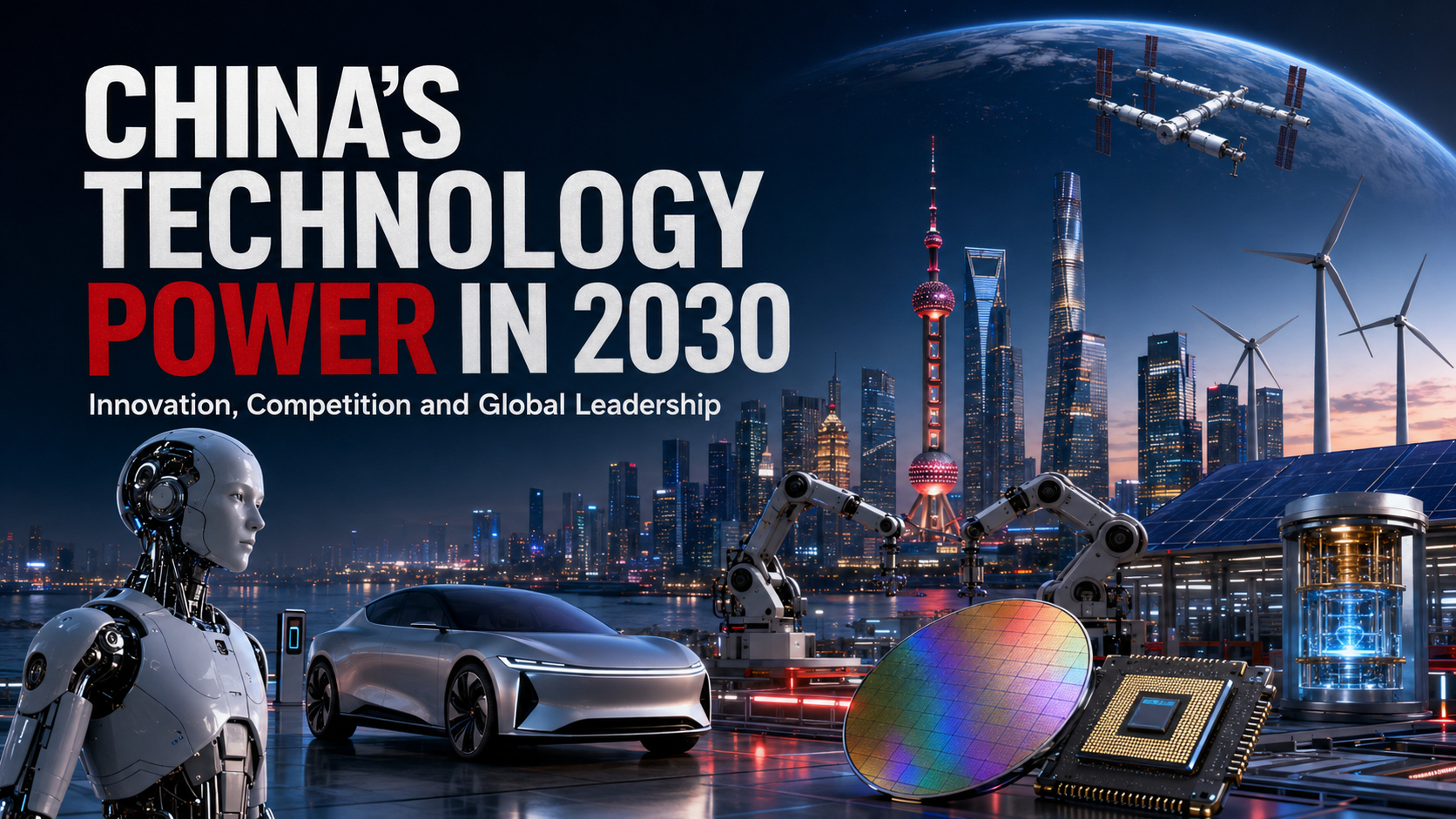
By 2030, China is likely to stand alongside the United States as one of the world’s two most powerful technology nations. It may lead globally in several areas—including electric vehicles, batteries, renewable-energy equipment, telecommunications infrastructure, industrial robotics, drones and technology manufacturing—while remaining behind the United States and its allies in certain foundational technologies, particularly the most advanced semiconductors and specialized chipmaking equipment.
China’s position, therefore, should not be described simply as first or second. Its strength will vary by sector. It is already an enormous producer of scientific research, patents and manufactured technology, but it still faces weaknesses in frontier chips, research efficiency, international trust and access to some foreign technologies.
The most reasonable forecast is that, by 2030, the world will have two competing but interdependent technology ecosystems: one centred on the United States and its allies, and another increasingly centred on China.
China’s Rapid Rise as an Innovation Power
China’s technological rise has been built on decades of investment in education, infrastructure, manufacturing and research. The country initially became known as the “factory of the world,” producing goods designed elsewhere. It has since moved decisively into product development, advanced engineering and original research.
The World Intellectual Property Organization ranked China 10th among 139 economies in its 2025 Global Innovation Index. It was China’s first appearance among the world’s ten most innovative economies. More importantly, China ranked fifth in innovation outputs and led the world in knowledge and technology outputs. It was also the only upper-middle-income economy among the top 30 countries in the index.
China had 24 of the world’s top 100 innovation clusters in 2025—more than any other country. The Shenzhen–Hong Kong–Guangzhou cluster ranked first globally, while Beijing was fourth. These clusters bring universities, laboratories, investors, manufacturers and technology companies together, allowing ideas to be converted into commercial products remarkably quickly.
If this momentum continues, China could move further up global innovation rankings before 2030. However, achieving a higher position will require improvements in basic research, institutional quality, international scientific cooperation and protection of intellectual property.
Artificial Intelligence: A Close Competitor to the United States
Artificial intelligence will be one of the most important measures of technological power in 2030. China has officially sought to become a global leader in AI, supporting research laboratories, computing centres, technology companies and the deployment of AI across industries.
According to Stanford University’s 2026 AI Index, China leads in AI publication volume, citations, patents and industrial robot installations. Chinese AI models also narrowed the performance gap with leading American models during 2025 and early 2026.
Nevertheless, the United States retains significant advantages. American institutions have historically produced more notable frontier models, attracted greater private AI investment and controlled much of the high-performance computing ecosystem. Leading American companies also benefit from access to the most advanced AI chips, cloud infrastructure and international developer communities.
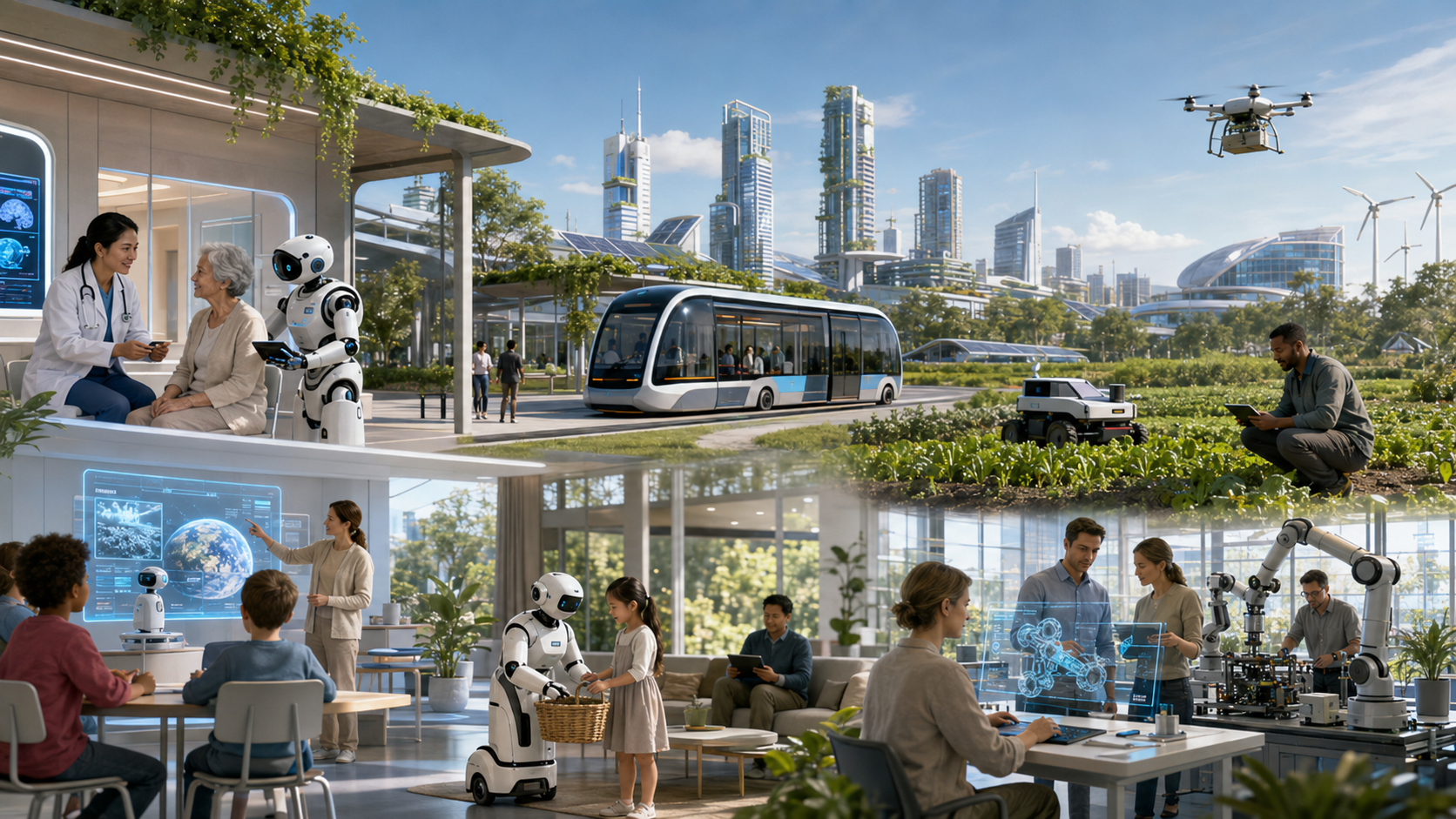
By 2030, China is likely to be one of the world’s top two AI powers. It may be especially strong in practical AI applications such as smart factories, autonomous vehicles, surveillance, healthcare, logistics, financial services, robotics and urban management. The United States may retain an advantage in frontier models and cutting-edge computing, but the gap could become much smaller.
China’s large domestic market gives it an important benefit: companies can test products at scale, collect operational data and reduce costs before expanding internationally.
Semiconductors: The Most Important Weakness
Semiconductors remain China’s most serious technological challenge. Chips are essential for AI systems, smartphones, vehicles, data centres, telecommunications equipment, advanced weapons and almost every modern electronic product.
China can design and manufacture many types of semiconductors, especially mature chips used in vehicles, appliances and industrial equipment. Its domestic chip companies have also demonstrated progress despite foreign restrictions.
However, China continues to depend partly on foreign technology for the most advanced semiconductor-manufacturing equipment, electronic design software and high-performance AI processors. The United States, the Netherlands, Japan, South Korea and Taiwan hold critical positions across this supply chain.
Since 2022, the United States and some of its allies have introduced or strengthened controls on the export of advanced chips and manufacturing equipment to China. These restrictions have slowed China’s access to the global technological frontier. At the same time, they have intensified Beijing’s determination to develop domestic substitutes.
By 2030, China will probably possess a much more self-sufficient semiconductor industry. It may dominate the production of mature and moderately advanced chips, but it is less certain whether it will match the very best manufacturing processes available elsewhere. Advanced lithography equipment could remain a particularly difficult obstacle.
Consequently, semiconductors will probably be the main factor preventing China from becoming the undisputed global technology leader by 2030.
Electric Vehicles, Batteries and Clean Technology
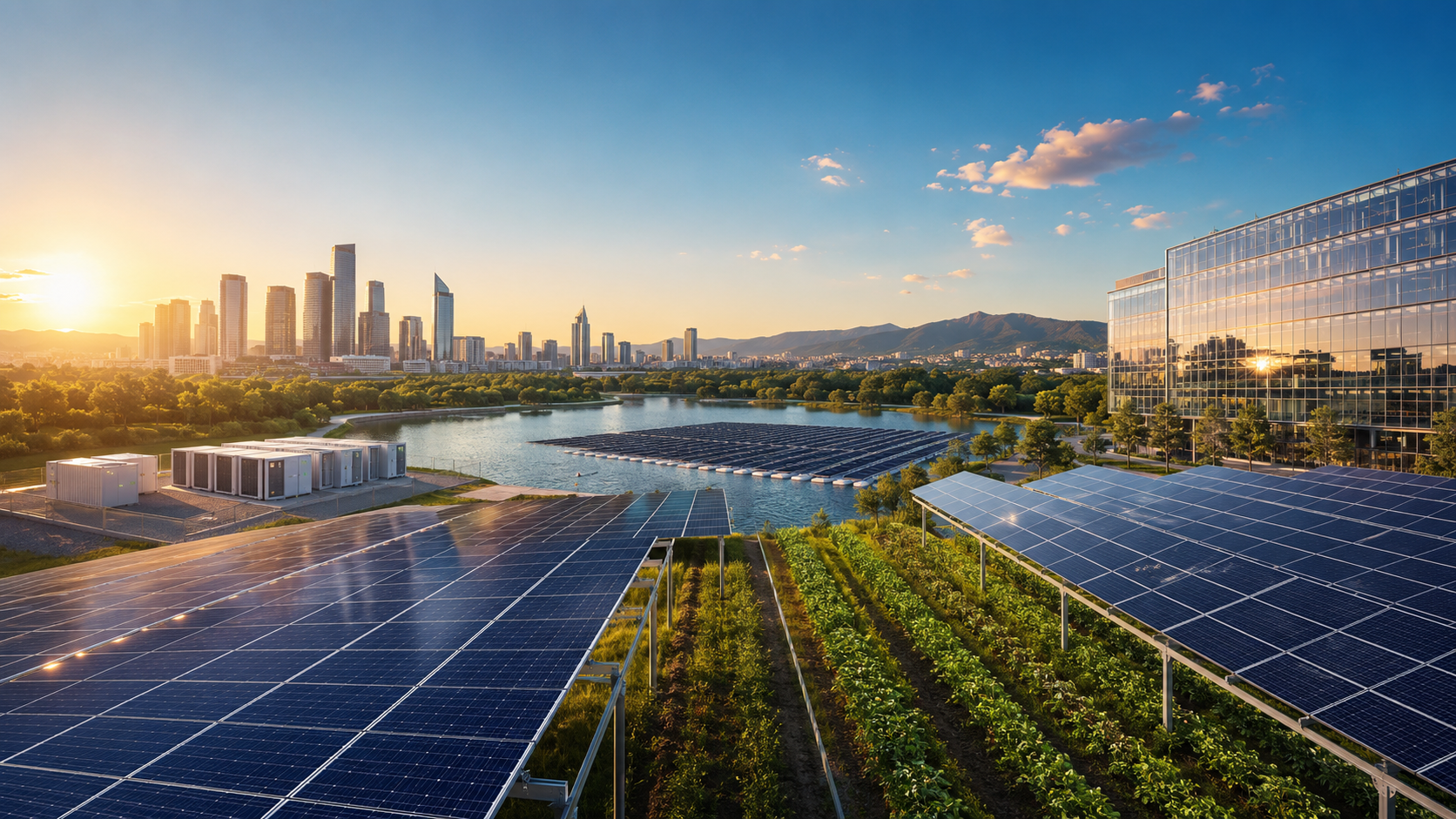
China’s strongest position may be in clean technology. It has developed enormous capacity in electric vehicles, lithium-ion batteries, solar panels, wind-energy equipment and the processing of critical minerals.
The International Energy Agency reported in 2022 that China produced approximately three-quarters of the world’s lithium-ion batteries. It also contained 70 percent of cathode-production capacity and 85 percent of anode-production capacity. China’s position has remained highly influential as global demand for electric vehicles and energy storage has grown.
Chinese companies such as BYD and CATL have combined technological development with large-scale manufacturing and competitive pricing. Chinese electric vehicles are increasingly entering markets in Asia, Latin America, the Middle East, Africa and Europe.
By 2030, China is likely to remain the leading manufacturing centre for electric vehicles, batteries and solar-energy technologies. Other countries are investing heavily in alternative supply chains, so China’s global market share may decline in certain areas. Nevertheless, its combination of infrastructure, skilled workers, suppliers and domestic demand will be extremely difficult to reproduce.
This strength will give China not only commercial influence but also geopolitical importance. Countries seeking affordable low-carbon technologies will often depend on Chinese products, financing or supply chains.
Robotics and Advanced Manufacturing
China is rapidly becoming the centre of global industrial automation. According to the International Federation of Robotics, Chinese factories installed approximately 295,000 industrial robots in 2024—54 percent of all installations worldwide. China’s operational stock exceeded two million industrial robots, the largest number in any country.
For the first time, Chinese robot manufacturers also captured a majority of their domestic market in 2024.
By 2030, China may lead the world in the manufacturing and practical deployment of industrial robots. Labour-force pressures, including an ageing population and slower growth in the number of workers, will encourage factories to automate more tasks.
The next phase will involve combining robots with AI, computer vision, advanced sensors and high-speed communications. This could create highly automated factories capable of producing vehicles, electronics, machinery and consumer goods with limited human intervention.
China’s challenge will be moving from being the largest user of robots to becoming the undisputed leader in their most sophisticated components, software and control systems.
Telecommunications, Digital Infrastructure and the Internet of Things
China already possesses one of the world’s largest digital infrastructures. Its extensive fibre-optic networks, data centres and 5G coverage support industrial automation, e-commerce, digital payments, telemedicine and smart-city services.
Chinese telecommunications companies have also supplied infrastructure to numerous developing countries. By 2030, China will probably be a major developer of 6G-related technologies, although global standards will remain an area of intense competition.
In addition, China could be a leading supplier of Internet of Things equipment connecting vehicles, factories, ports, power systems and household devices. Its strength in hardware manufacturing gives Chinese companies an advantage in producing connected products at relatively low cost.
However, cybersecurity concerns and political disputes may limit the use of Chinese telecommunications equipment in the United States, Europe and some allied countries. This could contribute to the division of global digital infrastructure into competing systems.
Scientific Research, Quantum Technology and Space
China has become one of the world’s largest producers of scientific research. Nature Index data for 2024 placed China ahead of the United States in its measure of contributions to selected high-quality scientific journals. The Chinese Academy of Sciences was also the leading institution in the 2025 Nature Index rankings.
China has demonstrated important capabilities in quantum communications, quantum computing research, materials science, chemistry, engineering and biotechnology. By 2030, it could lead in some quantum-communication applications, although the race to create useful, fault-tolerant quantum computers will remain open.
China’s space programme is another symbol of its technological development. The country operates its own space station, has conducted lunar exploration and is pursuing further missions involving the Moon, Mars, satellite communications and Earth observation.
By 2030, China is likely to be one of the world’s two leading space powers. Its space capabilities will support scientific research, communications, navigation, weather forecasting, national security and commercial services.
Research Spending and Human Capital
Technology leadership requires sustained financial investment. OECD data showed that China’s inflation-adjusted research and development expenditure grew by 8.7 percent in 2023, compared with 2.7 percent across the OECD area. China’s R&D intensity reached approximately 2.6 percent of GDP that year, approaching the OECD average.
Purchasing-power comparisons indicate that China’s total research expenditure has reached—or may already have exceeded—that of the United States. Nevertheless, the amount spent does not automatically determine technological leadership. Research quality, academic freedom, international collaboration, efficient allocation of funds and the ability to convert discoveries into reliable products are equally important.
China graduates large numbers of scientists and engineers. By 2030, this talent pool will support advances across AI, aerospace, energy, telecommunications and biotechnology. Yet China may continue to face difficulties attracting and retaining some globally mobile researchers, especially if geopolitical tensions restrict academic exchange.
The Main Challenges Facing China
China’s route to technological leadership is not guaranteed. Several obstacles could slow its progress.
First, restrictions on advanced semiconductor technology may increase development costs. Second, an ageing population and slower economic growth could reduce long-term investment capacity. Third, excessive state direction can sometimes produce waste, duplication and industrial overcapacity. Fourth, political controls over information and research may discourage open scientific debate.
China will also face international resistance. Governments concerned about cybersecurity, surveillance, subsidies and economic dependence are introducing tariffs, investment screening and industrial policies designed to reduce reliance on Chinese technology.
Environmental pressures, high energy demand from AI and data centres, and the need to protect personal information will create further policy challenges.
Final Assessment: Where Will China Stand in 2030?
By 2030, China will most likely be a technological superpower rather than the sole global technology leader. It should rank among the top two countries overall, competing directly with the United States while leading in selected industries.
China is likely to hold a leading or dominant position in:
- Electric vehicles and batteries
- Solar and renewable-energy manufacturing
- Industrial robotics and automated factories
- Commercial drones
- Telecommunications equipment
- Mature semiconductor manufacturing
- High-speed transport and infrastructure technology
- Large-scale practical applications of AI
It will probably remain highly competitive—but not necessarily dominant—in artificial intelligence, space technology, quantum science and biotechnology. Its greatest relative weakness is likely to remain the most advanced semiconductor ecosystem.
The global technology system of 2030 will therefore be shaped less by a single winner and more by sustained competition between China, the United States and their respective partners. China’s greatest advantage will be its ability to combine scientific research, enormous manufacturing capacity and a vast domestic market. Its greatest test will be whether it can overcome external restrictions and develop foundational technologies independently without losing access to international knowledge and markets.
References
- World Intellectual Property Organization. China Ranking in the Global Innovation Index 2025.
- World Intellectual Property Organization. Global Innovation Index 2025 Results.
- WIPO. Innovation Cluster Ranking 2025.
- Stanford Institute for Human-Centered Artificial Intelligence. AI Index Report 2026.
- Stanford HAI. AI Index Report 2025: Research and Development.
- International Energy Agency. Global Supply Chains of EV Batteries.
- International Energy Agency. Global EV Outlook 2026: Electric-Vehicle Batteries.
- International Federation of Robotics. World Robotics 2025—Industrial Robots.
- OECD. R&D Spending Growth Slows in OECD, Surges in China.
- OECD. Main Science and Technology Indicators.
- Nature Index. 2025 Research Leaders: China Expands Its Lead.
- Nature Index. 2025 Leading Research Institutions.
- Center for Strategic and International Studies. The Limits of Chip Export Controls in Meeting the China Challenge.
- Center for Strategic and International Studies. The Impact of Allied Semiconductor Export Controls.