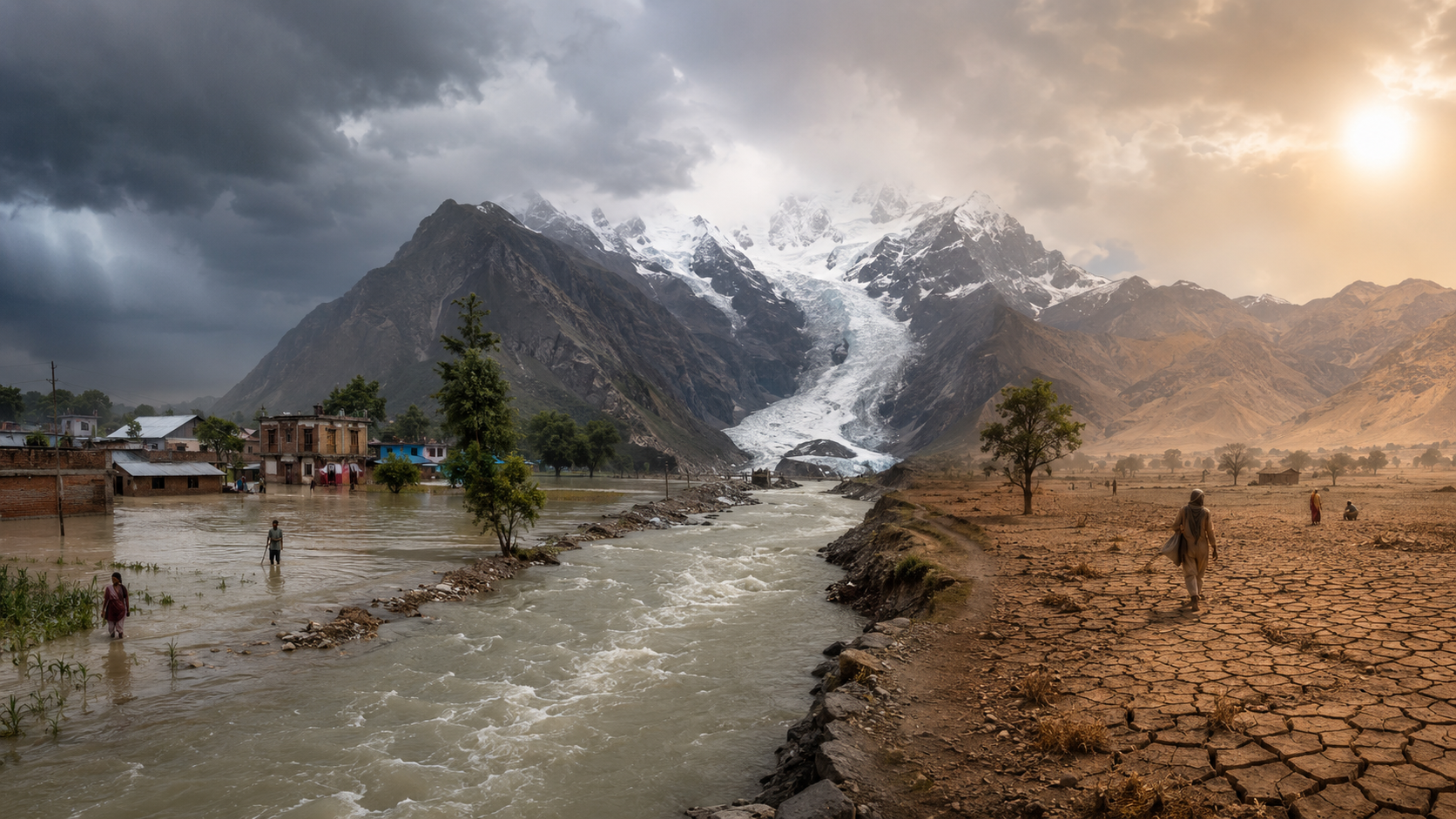
South Asia is entering a decisive period in its struggle against climate change. Home to nearly a quarter of the world’s population, the region includes Afghanistan, Bangladesh, Bhutan, India, the Maldives, Nepal, Pakistan and Sri Lanka. Its geography ranges from the glaciers of the Hindu Kush Himalaya to densely populated river plains, arid agricultural zones, tropical forests, megacities and low-lying islands.
This extraordinary diversity also creates multiple forms of climate vulnerability. Rising temperatures, destructive floods, irregular monsoon rainfall, prolonged droughts, melting glaciers, stronger coastal hazards and rising sea levels are already affecting millions of people. These threats do not occur separately. A heatwave may reduce crop yields, increase electricity demand, worsen water shortages and expose outdoor workers to dangerous conditions at the same time.
The World Meteorological Organization reported in its State of the Climate in Asia 2024 that Asia was warming approximately twice as rapidly as the global average. The report also highlighted accelerated glacier loss, record sea-surface temperatures and destructive floods and droughts across the continent. These developments demonstrate that climate change is no longer a distant environmental concern for South Asia—it is an immediate economic, humanitarian and public-health emergency. WMO, 2025
Why South Asia Is Especially Vulnerable
South Asia’s climate vulnerability is shaped by a combination of physical exposure, high population density, poverty, dependence on agriculture and uneven access to essential services.
Hundreds of millions of people live in areas exposed to river flooding, coastal storms, landslides, water scarcity or extreme heat. Many families depend directly on farming, fishing, livestock and natural resources for their income. When weather patterns change, these households often have limited savings, insurance or government support to help them recover.
Rapid and poorly planned urbanization creates additional risks. Cities such as Karachi, Dhaka, Delhi, Mumbai, Colombo, Kathmandu and Lahore are expanding while struggling with inadequate drainage, housing shortages, air pollution and pressure on water and electricity systems. Informal settlements are frequently built on floodplains, unstable hillsides or low-lying coastal land.
The Intergovernmental Panel on Climate Change warns that climate risks in Asia will increase progressively at global warming levels of 1.5°C, 2°C and 3°C. In South Asia, extreme heat, water shortages, heavy rainfall, flooding and food insecurity are among the most serious projected dangers. IPCC, 2022
Extreme Heat Is Becoming a Silent Disaster
Extreme heat is one of South Asia’s fastest-growing climate threats. Heatwaves are becoming more frequent, longer and more intense, while unusually high nighttime temperatures make it difficult for the human body to recover.
The danger is especially severe when high temperatures combine with humidity. Under such conditions, sweating becomes less effective at cooling the body, increasing the risk of heat exhaustion, heatstroke, dehydration, kidney problems and cardiovascular stress.
Outdoor workers—including farmers, construction workers, traffic police, delivery workers and street vendors—face some of the greatest risks. People living in crowded homes without reliable electricity, ventilation or air conditioning are also highly exposed. Older adults, pregnant women, children and people with existing health conditions require particular protection.
Heat also has major economic consequences. It reduces worker productivity, raises demand for electricity and can force schools and businesses to close. Electricity shortages during extreme heat can turn a difficult situation into a deadly one by interrupting cooling, drinking-water supplies and health services.
Urban areas are often hotter than their surroundings because concrete and asphalt absorb and retain heat. A shortage of trees, parks and open spaces intensifies this “urban heat-island” effect. Addressing extreme heat therefore requires heat-action plans, early warnings, public cooling spaces, greener cities, safer working hours and stronger emergency health services.
Changing Monsoons and Destructive Floods
The South Asian monsoon supports agriculture, replenishes reservoirs and sustains major river systems. However, climate change is making rainfall increasingly unpredictable. Some areas experience long dry periods, while others receive intense rain within a short time.
Warmer air can hold more moisture, creating conditions for heavier downpours. When extreme rain falls on deforested hills, overcrowded cities or poorly maintained drainage systems, the consequences can be devastating. Flash floods can destroy roads, bridges, schools, hospitals, crops and homes within hours.
Pakistan’s catastrophic 2022 floods showed how climate extremes can overwhelm an entire country. Exceptional monsoon rainfall and flooding affected millions of people, damaged infrastructure and agriculture, and created long-term health and displacement problems. The disaster also demonstrated that climate events can reverse years of development progress.
Bangladesh, India, Nepal, Sri Lanka and Afghanistan also face repeated flooding and landslides. In the Himalayan region, intense rainfall can destabilize slopes, block roads and isolate remote communities. In urban areas, blocked drains, uncontrolled construction and the loss of wetlands make even relatively short storms dangerous.
Flood protection cannot depend only on concrete embankments. Governments must also restore wetlands, protect natural drainage channels, improve land-use planning and prevent construction in the highest-risk areas.
Melting Himalayan Glaciers and the Future of Water
The Hindu Kush Himalaya is often described as the “water tower of Asia” because its glaciers, snowfields and mountain ecosystems supply rivers on which vast populations depend. These include the Indus, Ganges and Brahmaputra river systems.
According to the International Centre for Integrated Mountain Development, glaciers in the Hindu Kush Himalayan region disappeared 65 percent faster during 2011–2020 than in the previous decade. Under current emissions pathways, the region could lose as much as 80 percent of its present glacier volume by the end of the century. ICIMOD, 2023
Initially, accelerated melting can increase river flows and flood risks. It can also expand unstable glacial lakes, raising the threat of glacial lake outburst floods. These sudden events can release enormous quantities of water, ice and debris into valleys, destroying settlements and infrastructure.
Over the longer term, however, shrinking glaciers may reduce dependable water supplies during dry seasons. This would affect drinking water, irrigation and hydropower production. The result could be increasing competition among farms, cities, industries and regions.
Because many South Asian rivers cross national borders, changes in water availability also have diplomatic and security implications. Regional data-sharing, joint monitoring and cooperation over transboundary rivers are therefore essential.
Food Security and Agricultural Livelihoods
Agriculture remains a major source of employment and income across South Asia. Yet farming is highly sensitive to changes in temperature, rainfall, soil moisture and water availability.
Extreme heat can damage wheat, rice and other crops during critical stages of growth. Drought can reduce yields and livestock productivity, while floods can wash away fertile soil, seeds, machinery and stored food. Coastal saltwater intrusion can make farmland less productive, particularly in low-lying areas of Bangladesh, India, Pakistan and Sri Lanka.
Climate change also encourages the spread of certain crop pests and diseases. Farmers may respond by using more pesticides or groundwater, creating additional environmental and financial pressure.
Declining production can raise food prices, reduce household incomes and increase malnutrition. Poor families are hit hardest because they spend a larger share of their income on food. Women may face disproportionate burdens because they often manage household food, water and care responsibilities while having less access to land, credit and agricultural technology.
Climate-resilient agriculture offers part of the solution. Important measures include heat- and drought-tolerant crop varieties, efficient irrigation, improved weather forecasts, crop diversification, soil conservation, agricultural insurance and financial support for small farmers.
Sea-Level Rise and Coastal Communities
South Asia’s coastal areas contain major cities, ports, industrial centres, fishing communities and fertile agricultural land. Rising seas threaten these areas through permanent inundation, coastal erosion, saltwater intrusion and more damaging storm surges.
Bangladesh is particularly vulnerable because of its low-lying deltaic landscape and high population density. The Maldives faces an existential challenge because much of its land lies only slightly above sea level. Coastal cities such as Karachi, Mumbai, Chennai, Kolkata and Colombo must also prepare for higher seas combined with land subsidence, extreme rainfall and tropical storms.
Saltwater entering rivers, groundwater and farmland can reduce access to safe drinking water and damage crops. Families that lose land or livelihoods may be forced to migrate, placing additional pressure on towns and cities.
Coastal adaptation will require protective infrastructure, restored mangrove forests, stronger building standards, improved cyclone shelters and, in some places, carefully planned relocation. Mangroves are particularly valuable because they reduce wave energy, provide wildlife habitat, store carbon and support fishing livelihoods.
Health, Inequality and Climate Migration
Climate change affects health both directly and indirectly. Heatwaves can cause illness and death, while floods may contaminate drinking water and increase the risk of diarrhoeal diseases. Changing temperature and rainfall patterns can influence the spread of mosquito-borne diseases such as dengue and malaria.
Disasters can also interrupt vaccination, maternal healthcare and treatment for chronic illnesses. Loss of homes and livelihoods contributes to anxiety, depression and long-term psychological trauma.
Climate impacts are unequal. Wealthier households may be able to move, insure their property or purchase cooling and clean water. Poorer families often remain trapped in unsafe areas and lose a greater proportion of their possessions during disasters.
Migration is consequently becoming an important climate issue. The World Bank estimated that, under a pessimistic scenario, South Asia could have an average of approximately 35.7 million internal climate migrants by 2050. Water scarcity, lower crop productivity and sea-level rise are expected to be important drivers. More climate-friendly and inclusive development could substantially reduce this number. World Bank, 2018
Migration should not automatically be treated as a failure. When properly supported, it can be a legitimate adaptation strategy. Problems arise when people are displaced suddenly or move to cities without housing, employment, education or health services.
What South Asia Must Do
South Asian governments need to pursue adaptation and emissions reduction simultaneously. Although the region’s historical contribution to global greenhouse-gas accumulation is relatively limited, its future development choices will influence emissions, air quality, energy security and public health.
The most urgent priorities include:
- Expanding people-centred early-warning systems for floods, cyclones, heatwaves and glacial hazards.
- Building climate-resilient schools, hospitals, roads, water systems and electricity networks.
- Improving urban drainage and preventing construction on floodplains and natural waterways.
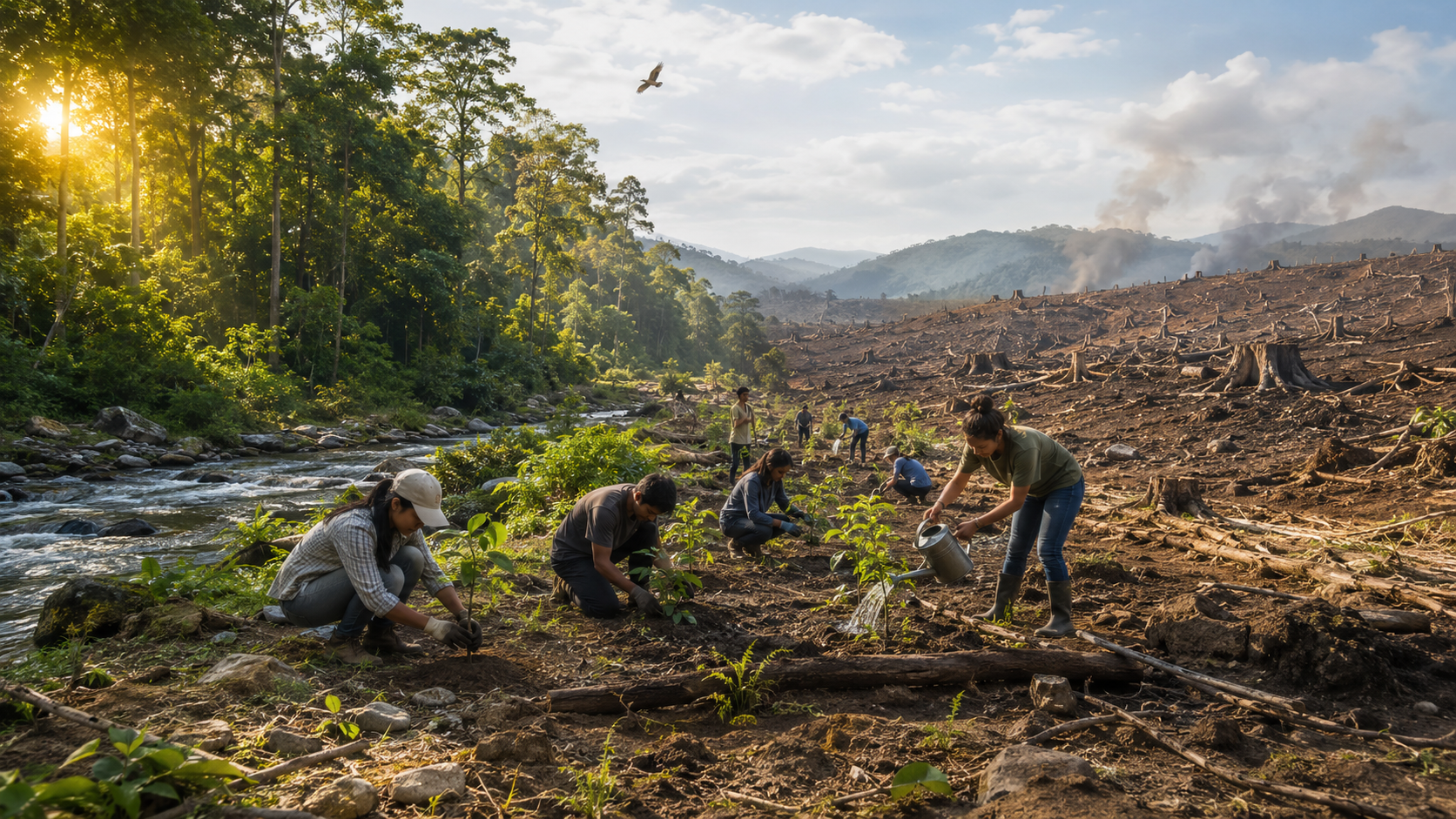
- Protecting forests, wetlands, mangroves and mountain ecosystems.
- Supporting small farmers with climate information, resilient seeds, insurance and affordable finance.
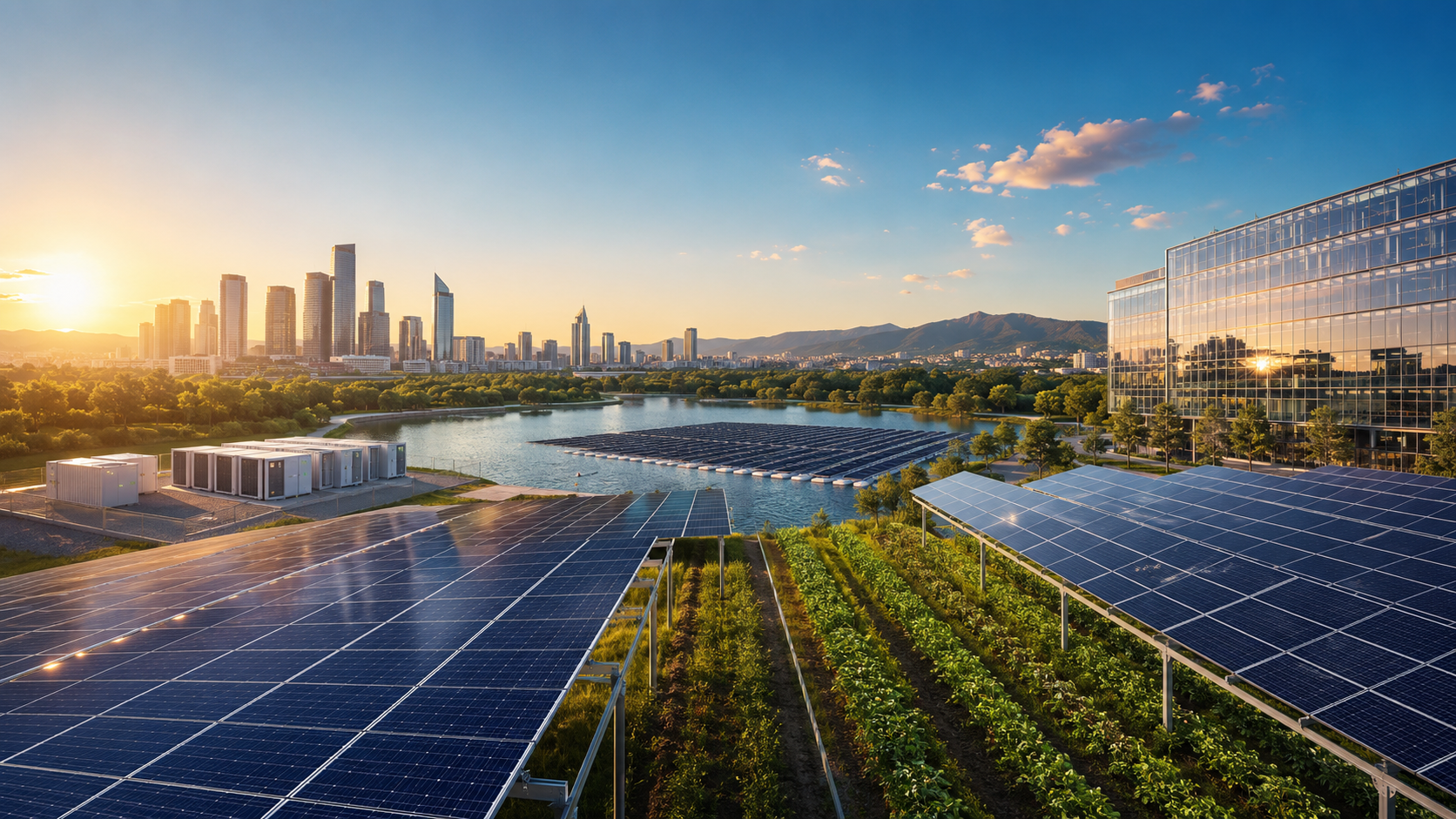
- Accelerating renewable energy, energy efficiency and cleaner public transport.
- Developing national and municipal heat-action plans.
- Strengthening social-protection systems for vulnerable households.
- Improving regional cooperation on rivers, glaciers, monsoons, air pollution and disaster warnings.
- Securing greater international climate finance for adaptation and unavoidable loss and damage.
Clean-energy investment can also reduce South Asia’s dependence on imported fossil fuels while improving air quality. Solar and wind power, modern electricity grids, energy-efficient buildings and electrified transport can create jobs while cutting emissions.
Climate Justice and International Responsibility
South Asia’s climate crisis is also an issue of global justice. Many of the region’s most vulnerable communities have contributed very little to the greenhouse-gas emissions causing global warming. Nevertheless, they are losing homes, crops, health, income and sometimes their lives.
Developed countries and major emitters must deliver deeper emissions cuts and provide adequate, accessible climate finance. Funding should include grants for adaptation, disaster preparedness and loss and damage—not only loans that increase the debt burdens of vulnerable countries.
At the national level, climate justice means ensuring that resources reach the communities facing the greatest risks. Women, children, persons with disabilities, indigenous communities, informal workers and people living in remote or impoverished areas must have a meaningful role in climate planning.
Conclusion
Climate change is transforming South Asia’s environment, economy and society. Its effects can already be seen in lethal heatwaves, destructive floods, unreliable rainfall, retreating glaciers, rising seas, food insecurity and population displacement.
The future, however, is not predetermined. Strong early-warning systems, resilient infrastructure, climate-smart agriculture, ecosystem restoration, clean energy and regional cooperation can prevent enormous losses. International support and rapid reductions in global emissions can further limit the severity of future impacts.
The cost of action is significant, but the cost of delay will be far greater. For South Asia, climate policy is no longer simply about protecting nature. It is about protecting human life, economic development, food and water security, and the prospects of future generations.
References
- Intergovernmental Panel on Climate Change. (2022). Climate Change 2022: Impacts, Adaptation and Vulnerability—Chapter 10: Asia. IPCC report
- Intergovernmental Panel on Climate Change. (2023). Climate Change 2023: Synthesis Report—Summary for Policymakers. IPCC synthesis report
- International Centre for Integrated Mountain Development. (2023). Water, Ice, Society, and Ecosystems in the Hindu Kush Himalaya: An Outlook. ICIMOD HI-WISE findings
- International Centre for Integrated Mountain Development. (2023). Landmark Report on the Impacts of Disappearing Snow and Ice in the Hindu Kush Himalaya. ICIMOD report summary
- World Meteorological Organization. (2025). State of the Climate in Asia 2024. WMO publication
- World Bank. (2018). Groundswell: Preparing for Internal Climate Migration—South Asia Regional Brief. World Bank report
- World Bank. (2021). Groundswell Part II: Acting on Internal Climate Migration. World Bank publication